
How Ready Mix Plants Reduce Construction Time in Urban Projects

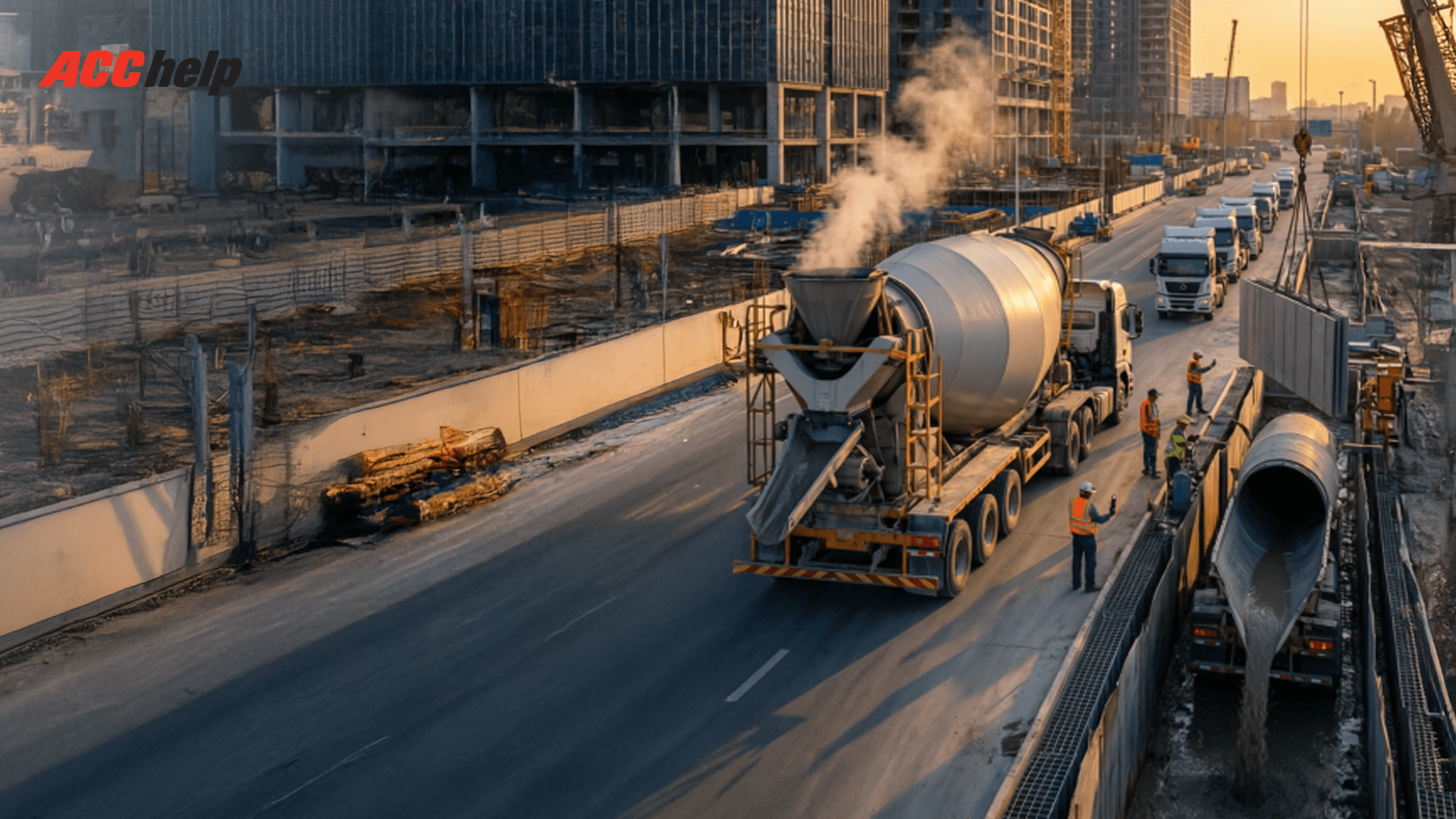
Table of Content
In cities, construction is about working within tight timelines, limited space, traffic restrictions, labour availability, and strict regulations. Whether it is a residential tower, a redevelopment project, or a compact independent home, urban construction demands speed without compromising quality. This is where ready mix concrete plays a crucial role.
At ACC, we have seen how the shift from on-site concrete mixing to ready mix concrete has transformed the pace of urban construction. It has led to rethinking how concrete reaches the site, how it is placed, and how smoothly the entire project moves from one stage to the next.
The Time Challenges of Urban Construction
Urban projects face a unique set of constraints that directly affect timelines.
There is limited space for storing raw materials like sand, aggregates, and cement bags. Noise restrictions often limit working hours. Skilled labour availability can be unpredictable. Traffic congestion makes material movement slow and unreliable. On top of this, developers are under constant pressure to meet delivery deadlines.
Traditional site-mixed concrete struggles in such conditions. Mixing on site takes time, requires space, depends heavily on labour, and increases the risk of delays if any one element goes wrong. Concrete transported directly from a ready mix plant all prepared to be poured straightaway addresses many of these issues at once.
What Makes Ready Mix Concrete Different
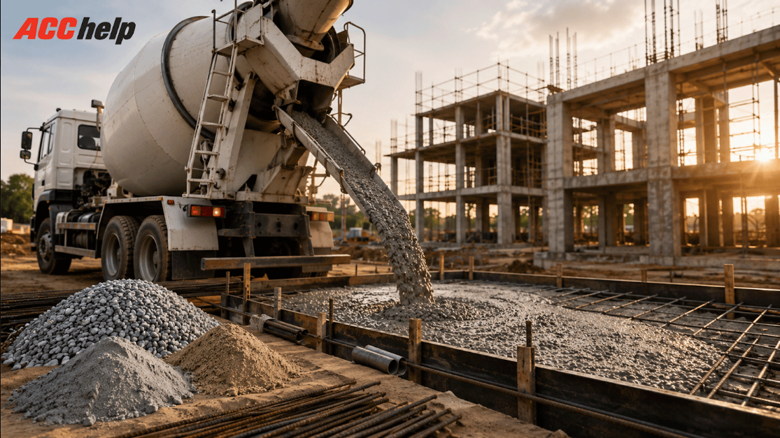
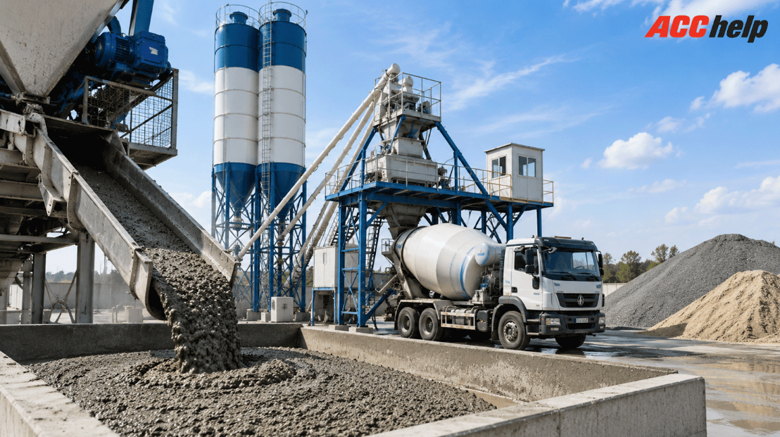
Ready mix concrete is produced at a batching plant under controlled conditions and delivered to the site in a transit mixer. The proportions of cement, aggregates, water, and additives are carefully designed for the specific application.
Instead of spending hours arranging materials, setting up mixers, and supervising manual mixing, concrete arrives ready for placement. This single shift changes how construction schedules are planned and executed, especially in dense urban environments.
Faster Start to Every Construction Activity
One of the biggest time-saving advantages of ready mix concrete is how quickly work can begin.
With site mixing, a significant amount of time is spent preparing before actual concreting starts. Materials need to be unloaded, measured, mixed, and tested. Any delay in material delivery or labour availability can push the entire schedule back.
With ready mix concrete, once the site and formwork are ready, concreting can start almost immediately. The ACC concrete arrives in a consistent, workable state, allowing teams to focus purely on placement and finishing. This reduces idle time and keeps daily progress on track.
Reduced Dependence on On-Site Labour
Labour availability is one of the most unpredictable factors in urban construction. Skilled workers may not always be available when required, and coordinating large teams for mixing and placing concrete can be challenging.
Ready mix concrete significantly reduces labour dependency. There is no need for workers to handle raw materials, operate mixers, or manage batching on site. Smaller teams can place and finish concrete efficiently, which speeds up execution and reduces scheduling risks.
This becomes especially important in cities where labour costs are higher and labour shortages can stall projects for days.
Consistent Quality Means Fewer Reworks
Rework is one of the biggest hidden causes of construction delays. Poorly mixed concrete can lead to honeycombing, weak sections, surface defects, or inconsistent strength. Fixing these issues later consumes both time and money.
ACC ready mix concrete is produced using controlled mix designs and quality checks. Each batch is consistent, reducing the chances of defects during placement. When concrete performs as expected the first time, subsequent activities like curing, formwork removal, and finishing can proceed without interruption.
In urban projects where timelines are tightly linked, avoiding rework can save weeks over the course of construction.
Faster Placement in Congested Spaces
Urban construction sites are often cramped, with limited access and dense reinforcement. Placing concrete in such conditions can be slow if the mix is not designed for easy flow.
Many ACC ready mix concrete variants are engineered for high workability and smooth placement. They flow easily into formwork, pass through congested reinforcement, and require less vibration. This speeds up pouring and finishing, especially in columns, slabs, and shear walls common in urban buildings.
When placement itself becomes faster, entire floors or structural stages can be completed ahead of schedule.
Shorter Construction Cycles Between Floors
In multi-storey urban projects, time is often measured floor by floor. The faster one floor is completed, the sooner work can move upward. ACC ready mix concrete helps shorten these cycles. Predictable setting behaviour, consistent strength gain, and controlled curing timelines allow formwork to be removed on schedule. This makes it easier to maintain a steady rhythm of construction without unexpected pauses.
Over multiple floors, even small time savings per cycle add up to significant reductions in overall project duration.
Better Planning and Predictable Deliveries
Urban construction depends heavily on coordination. A delayed concrete pour can disrupt labour schedules, equipment bookings, and even local traffic permissions.
Ready mix concrete allows for better planning. Deliveries can be scheduled in advance, aligned with site readiness, and adjusted based on traffic conditions. This predictability helps project managers plan daily tasks more accurately and avoid last-minute changes.
When materials arrive exactly when needed, work flows more smoothly and time is used efficiently.
Cleaner Sites and Faster Transitions Between Tasks
On-site mixing creates dust, waste, and clutter. Cleaning up after mixing takes time and often delays the next activity.
Ready mix concrete keeps sites cleaner and more organised. With fewer raw materials stored on site and less waste generated, transitions between construction stages become faster. Activities like waterproofing, masonry, or finishing can begin sooner because the site is ready sooner.
In dense urban areas, where space and cleanliness are closely monitored, this advantage directly supports faster project completion.
Support for Night or Limited-Hour Construction
Many urban projects operate under restricted working hours due to noise regulations or neighbourhood constraints. In such cases, every available hour must be used efficiently.
Ready mix concrete makes this possible. Since there is no time spent on mixing, the entire window can be dedicated to placement and finishing. This makes night pours or short-duration concreting activities more effective and less stressful.
Is Ready Mix Concrete Worth It for Urban Projects?
For urban construction, time is money in the most literal sense. Delays affect financing costs, possession timelines, and overall project viability.
Ready mix concrete helps reduce construction time by simplifying logistics, improving quality consistency, and streamlining on-site operations. While it requires advance planning and coordination, the time savings and eventual reduced house building cost that it delivers often outweigh the initial effort.
At ACC, we see ready mix concrete as a practical solution for modern urban challenges. It supports faster, cleaner, and more reliable construction, helping projects move from planning to completion with fewer disruptions.
Final Thoughts
Urban construction is about building efficiently within constraints. Ready mix concrete aligns perfectly with this reality. By shifting complex processes away from the site and into controlled production environments, it allows construction teams to focus on what matters most: building safely, accurately, and on time.
In cities where every day counts, ready mix concrete is not just a material choice. It is a time management strategy that helps urban projects move forward with confidence.
FAQ
Q.1 What is the price of ready mix concrete per cubic meter in India?
The price of ready mix concrete in India varies based on grade, location, distance from the plant, and application type. In general, higher-strength or specialised mixes cost more than basic grades. Instead of focusing only on per-cubic-metre cost, it’s important to look at the overall value, including time saved, reduced labour, and lower chances of rework.
Q.2 Where can I get ready mix concrete near me with timely delivery?
You can get ready mix concrete from authorised batching plants operated by established cement companies. At ACC, we have a wide network of ready mix concrete plants across cities, allowing deliveries to be planned based on site readiness and traffic conditions. Using a company-backed supplier helps gives you the guarantee of consistent quality, proper mix design, and predictable delivery timelines, which are critical for urban construction projects.
Q.3 What is the ideal concrete mixing ratio for slabs and columns?
There is no single fixed mixing ratio that suits all slabs and columns. The ideal mix depends on structural design, load requirements, exposure conditions, and construction method. Slabs and columns usually require different grades of concrete.
Q.4 Is ready mix concrete suitable for small home construction projects?
Yes. Ready mix concrete is suitable even for individual homes, especially in cities where space, labour, and time are limited.
Q.5 Does ready mix concrete reduce overall construction cost?
While the upfront cost may seem higher, it often reduces total cost by saving time, labour, material wastage, and rework expenses.