
Understanding Where Your Construction Budget Goes And How You Can Optimise It

Table of Content
When you start building your home, one of the first things you think about is the budget. You may have a rough number in mind, but once construction begins, costs start adding up in ways you may not have expected. That’s because construction is not a single expense. It is a combination of multiple smaller costs that come together over time.
Understanding where your money actually goes is the first step to managing your budget better. And once you know that, you can start optimising it without compromising on quality.
Why Construction Budgets Often Go Off Track
Most budget issues don’t happen because of one big mistake. They usually happen due to small gaps in planning. You might underestimate material quantities, overlook certain costs, or make last-minute changes. Over time, these add up and push your budget beyond what you planned.
That’s why having clarity from the beginning makes a big difference.
The Three Major Cost Components
Every home construction budget is broadly divided into three main parts:
- Labour
- Materials
- Equipment
Understanding how much each of these contributes helps you plan better and avoid surprises later.
1. Labour Costs
Labour is one of the biggest components of your construction budget. It usually takes up a significant portion because every stage of construction requires skilled and unskilled workers.
This includes:
- Masonry work
- Plumbing and electrical work
- Finishing and installation
Labour costs can vary based on location, demand, and the complexity of your project.
How you can optimise it:
- Plan work in phases to avoid idle labour
- Hire experienced workers to reduce rework
- Keep timelines realistic to avoid delays
Efficient labour planning helps you save both time and money.
2. Material Costs
Materials are another major part of your budget, often taking up a large share of total construction cost.
This includes:
- Cement
- Steel
- Bricks or blocks
- Sand and aggregates
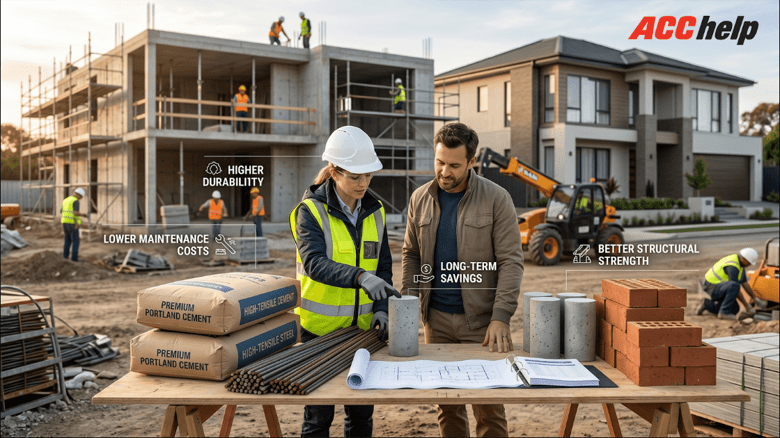
Material costs depend on quality, quantity, and market conditions. Higher quality materials may seem expensive initially but often reduce long-term repair and maintenance costs.
How you can optimise it:
- Estimate quantities accurately
- Avoid over-ordering or wastage
- Choose materials based on value, not just price
Smart material choices help you balance cost with durability.
3. Equipment Costs
Equipment costs may not seem very large, but they still contribute to your overall budget.
This includes:
- Machinery rentals
- Tools and equipment
- Site handling equipment
These costs usually depend on how long the equipment is used and how efficiently it is managed.
How you can optimise it:
- Schedule equipment usage properly
- Avoid unnecessary rentals
- Use the right equipment for the job
Even small improvements here can help control costs.
Additional Costs You Should Not Ignore
Apart from the main three, there are other costs that often get overlooked but can impact your budget significantly.
Overhead Costs
These include expenses like:
- Site management
- Transportation
- Administrative costs
They may not be directly visible but still affect your overall spending.
Permits and Approvals
Before construction begins, you need approvals and permissions.
These include:
- Local authority permits
- Utility connections
- Legal documentation
Ignoring these costs early can lead to delays and unexpected expenses later.
Financing Costs
If you are taking a loan, interest becomes part of your construction cost. This is something many homeowners don’t factor in properly, but it can impact your total budget over time.
Why Planning Material Quantities Matters
One of the most common mistakes in construction is inaccurate material estimation. Ordering too much leads to wastage. Ordering too little causes delays. That’s why making a proper construction materials list and understanding how much material you actually need is important.
When your quantities are clear, you can:
- Plan purchases better
- Negotiate with suppliers
- Avoid unnecessary expenses
This is where planning tools become very useful.
Short-Term Savings vs Long-Term Costs
It is tempting to reduce costs wherever possible during construction but not all savings are beneficial.
For example:
- Cheaper materials may lead to repairs later
- Poor workmanship may increase maintenance costs
- Cutting corners may affect durability
Instead of focusing only on saving money today, think about how your choices will perform over time.
How You Can Optimise Your Construction Budget
Here are a few practical ways to manage your house construction cost better:
- Plan your project in detail before starting
- Break down costs into clear categories
- Track expenses regularly
- Avoid frequent design changes
- Choose reliable suppliers and materials
- Keep a contingency buffer for unexpected costs
Small decisions taken early can prevent bigger financial issues later.
Planning Your Budget with Better Clarity
One of the easiest ways to avoid confusion is to start with a structured estimate instead of a rough guess. This is where tools like an online building construction cost calculator can help.
Using the ACC Cement construction cost calculator, you can get a realistic estimate based on:
- Your construction area
- The location you are building in
- The type of structure you choose
It also gives you an idea of:
- Material quantities like cement, steel, and bricks
- Approximate cost involved
This makes it easier for you to plan your budget before you even start speaking to contractors.
Final Thoughts
Your construction budget is not just a number. It is a combination of multiple decisions made throughout your home-building journey. When you understand where your money is going, you gain better control over your project. By planning carefully, estimating accurately, and making informed choices, you can optimise your budget without compromising on quality.
FAQ
Q.1 What is the average house construction cost in India?
The average house construction cost in India typically ranges between ₹1,500–₹3,500 per sq ft depending on location, materials, and design choices. Costs vary based on labour rates, material quality, and project complexity.
Q.2 How can I reduce house construction cost without compromising quality?
You can reduce costs by planning properly, avoiding design changes, choosing reliable materials, and managing labour efficiently. Focusing on value instead of just low prices helps you save money without affecting long-term durability.
Q.3 Which materials are essential for house construction in India?
Key materials include cement, steel, bricks or blocks, sand, and aggregates. These form the core of your structure and directly impact strength, durability, and overall construction quality throughout your home.
Q.4 How can a construction materials list help estimate construction cost?
A materials list gives you clarity on quantities required for each stage. This helps you plan purchases, avoid wastage, compare supplier pricing, and create a more accurate and controlled construction budget.
Q.5 Why do construction budgets often go over the initial estimate?
Budgets usually increase due to poor planning, inaccurate material estimation, or design changes during construction. Small cost differences at each stage add up over time, making the final cost higher than expected.