
White Cement vs Regular Cement: What’s the Difference?

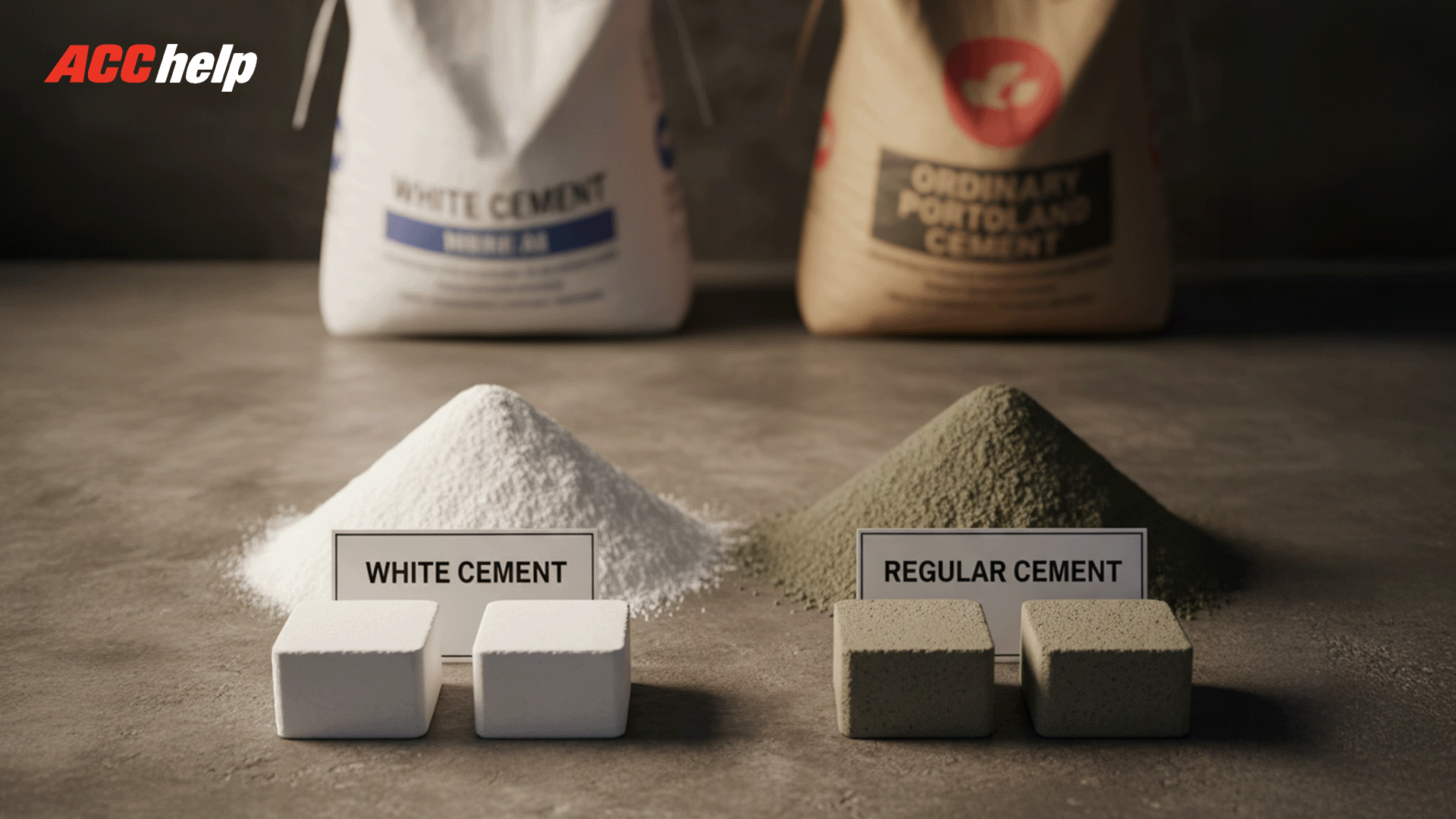
Table of Content
When you think about cement, chances are you’re imagining that familiar grey powder used to build the strongest parts of your home from the foundation to the roof. But what about white cement? It’s not just about the colour. White cement plays a unique role in home building and finishing, especially when aesthetics matter just as much as strength.
As a cement manufacturer deeply invested in helping you build homes that last for generations, we want to simplify the confusion around white cement and regular grey cement.
What is Regular Cement (Grey Cement)?
Regular cement, often referred to as Portland cement, is the most common type of cement used in construction. It’s grey in colour due to the presence of iron oxide and manganese in the raw materials. It’s known for:
- High compressive strength
- Great bonding ability
- Cost-efficiency
- Versatility in applications
This is the cement that builds your walls, roofs, foundations, beams, columns — pretty much your entire home structure. It’s reliable, durable, and works perfectly for both RCC (Reinforced Cement Concrete) and brickwork.
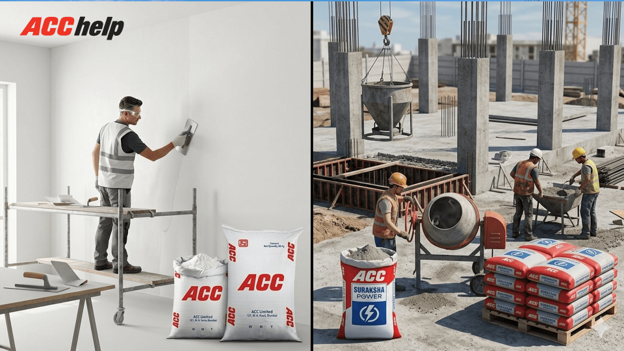
We offer a wide range of grey cement products like ACC Suraksha Power, ACC HPC Cement, and ACC Super Shaktimaan, each crafted to meet specific construction needs like fast setting, high workability, or long-term strength.
What is White Cement?
White cement is also a type of Portland cement, but it’s made from raw materials with very low iron content. This gives it its bright white colour. While it offers similar strength and binding properties to grey cement, its main purpose is aesthetic.
White cement is used in:
- Decorative works like marble finishes and terrazzo tiles
- Wall putty
- Precast decorative items
- Exposed surfaces like facades or walkways
- Designer flooring or sculptural work
Because of its brightness and smooth finish, white cement helps achieve clean, modern, and polished looks in home interiors and exteriors.
Key Differences Between White Cement and Regular Cement
Let’s break it down across various factors:
1. Colour and Appearance
- White Cement: Bright white due to low iron and manganese content
- Grey Cement: Grey due to natural iron oxide content in raw materials
This difference makes white cement ideal for visible surfaces where looks matter.
2. Cost
- White Cement: More expensive due to refined raw materials and manufacturing process
- Grey Cement: More cost-effective and used in bulk for structural works
If you're working on a tight budget, regular cement is the practical choice for your structure. But if you're finishing or decorating, white cement offers better visual results.
3. Applications
- Grey Cement: Best for construction work — beams, slabs, footings, brickwork, etc.
- White Cement: Best for decorative applications — wall finishes, tiles, architectural effects
We always recommend using our grey cement products for your foundation and structural work, then switching to white cement or wall putty for the finishing layers.
4. Strength and Setting Time
There’s a common myth that white cement is weaker than grey cement, but that’s not true. Both types offer comparable strength if manufactured under the same standards. However, white cement is usually used in thinner layers, so it's not designed to carry heavy structural loads.
5. Availability
- Grey Cement: Easily available everywhere
- White Cement: Slightly less common and usually found in specialised construction stores
While we focus primarily on high-performance grey cement, white cement complements the construction process well — especially when paired with a grey cement structural base.
Which One Should You Use for Your Home?
The choice depends on the construction phase:
Use Regular Cement When:
- Laying the foundation
- Building walls and slabs
- Casting beams or columns
- Doing general masonry work
Use White Cement When:
- Doing decorative plaster or wall finishing
- Polishing marble or tiles
- Creating stylish exteriors or motifs
- Applying wall putty for a smooth paint base
So, for structure go with strength. Use our grey cement range. For aesthetics, switch to white cement for the final touches.
Can They Be Mixed?
It’s not advisable to mix white and grey cement for any structural application. They may have different setting properties, and the appearance could be inconsistent. Keep them separate based on the purpose of use.
What About Wall Putty?
Most wall putty is made using white cement because of its smooth texture and bright finish. It prepares the wall for painting and gives a longer-lasting surface. We recommend using white cement-based putty after your grey cement plastering work is done.
Final Thoughts: White or Grey? Know What You Need
Both white and grey cement are essential for different stages of building your home. One gives you the structural backbone, the other gives you the aesthetic and finesse. You don’t need to choose one over the other. They complement each other perfectly.
As a cement manufacturer that's been trusted by homeowners and engineers for decades, we take pride in offering some of the best cement in India that forms the strong foundation of every structure. And when you’re ready to polish and finish your walls, white cement and wall putty help your dream home look as good as it feels.