

White Portland Cement vs Grey Cement: What’s the Difference?

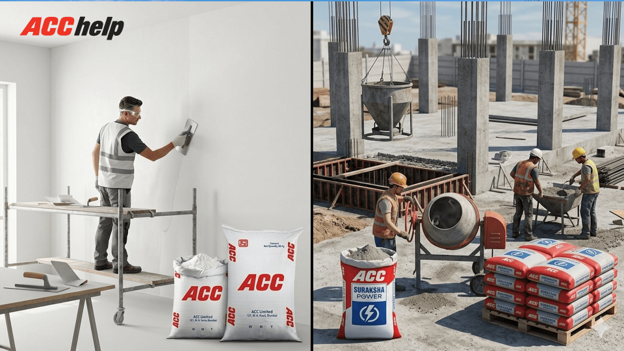
Table of Content
When you stand before a construction site, you see the skeleton of a future home taking shape. That skeleton is held together by a material that is so fundamental that we often take it for granted, i.e. cement. However, not all cement is the same.
If you’ve ever walked into a hardware store or spoken to a contractor, you might have heard two terms thrown around, “grey cement” and “white portland cement”. While they both serve the primary purpose of binding materials, they are as different as a structural girder is from a piece of crown molding.
What is Grey Cement?
Grey cement is the silent hero of the construction world. It is the material of choice for binding the foundations, the load bearing column, the roof slabs, and the brickwork mortar of your home. The distinct grey color comes from the raw materials used in its production, which are limestone, clay, iron, and manganese oxides. These raw ingredients are crushed and heated into a fine powder, and gypsum is added to regulate the setting time. The high iron and manganese content is what gives it that industrial grey hue.
When you look at ACC cement products, you are looking at the pinnacle of grey cement engineering. These products are designed for maximum compressive strength, durability, and resilience. Whether you are using a standard PPC or specialised high strength variant, the focus is on creating a structure that can withstand the test of time, weather, and physical stress.
What is White Portland Cement?
White portland cement is a hydraulic binder that hardens when mixed with water. Its manufacturing process is highly specialised to achieve one specific goal, a pristine, white brilliant color.
To achieve this, the manufacturing process for the white portland cement must be strictly controlled. Manufacturers must select raw materials that are extremely low in iron and manganese oxides, as even trace amounts of these elements will impart a tint to the final product. Because of this rigorous selection process and the need for specialised kiln fuel, white portland cement is naturally more expensive than its grey counterpart.
The Key Differences
| Difference | Grey Cement | White Portland Cement |
|---|---|---|
| Composition and Color | High iron and manganese oxide content. It is coarse, granular, and ranges from dark to light grey. | Carefully selected raw materials with minimal metal oxides. It's incredibly fine and boasts high opacity, brilliant white finish. |
| Strength and Structural Application | Engineered for maximum structural integrity. It is the backbone of skyscrapers, dams, and bridges. Its strength to cost ratio is unbeatable, making it the only logical choice for large scale structural casting. | While it possesses structural strength comparable to grey cement, its higher price point makes it prohibitive for use in mass structural applications like massive foundation pours. It is structurally sound, but it is over engineered for use as a structural filler. |
| Cost | Highly economical due to mass production techniques and abundant raw materials. | The limited availability of pure raw materials and the specialised, longer production process drive the price up. |
| Versatility and Aesthetics | Excellent for utility but limited in artistic potential. It acts as a base that usually requires a coat of paint, putty, or cladding to look finished. | The ultimate tool for architects and designers. It serves as a blank canvas. When mixed with pigments, it can create any color in the rainbow, and on its own, it offers a clean, modern, exposed concrete look that is highly desirable. |
| Uses |
|
|
| Maintenance and Care | These typically are low maintenance. Once cured and sealed, they are incredibly robust. | Because white surfaces show dirt more easily, they may require more frequent cleaning. Additionally, if you have used white cement for decorative outdoor elements, it is often advisable to apply a clear sealer. This prevents moisture and dust from settling into the fine pores of the white portland cement, ensuring it stays looking bright and clean for years. |
Making the Right Choice for Your Build
The choice between grey cement and white portland cement should never be a source of stress. Construction is a balance of utility and art. By knowing when to deploy the massive strength of grey structural cement and the elegant flexibility of white decorative cement, you are well on your way to building a home that is as beautiful as it is strong.
Frequently Asked Questions
Q.1 What is white cement used for and how is it different from grey cement?
Ans. White cement is a specialized, high-purity binding material used primarily for aesthetic, decorative, and finishing purposes, such as tile grouting, wall putty, mosaic flooring, and, often, in combination with pigments for colored concrete. While maintaining similar strength to grey cement, it differs by having a brilliant white color, lower levels of iron/manganese, higher production costs, and higher, more detailed, or artistic application uses.
Q.2 Can I use white cement as normal cement?
Ans. While white cement is often used for decorative applications, it might also be suitable for certain structural purposes.
Q.3 What are the disadvantages of white cement?
Ans. The bright colour of white cement can show stains and discolourations more prominently, necessitating regular cleaning and maintenance. White cement can be sensitive to variations in water content and temperature during the curing process, requiring more precise handling.
Q.4 What are the side effects of white cement?
Ans. White cement side effects primarily include severe skin irritation and chemical burns due to its high pH, when wet, causing dermatitis. Inhalation of dust causes respiratory irritation, and prolonged exposure can lead to chronic lung diseases. It can cause serious eye damage, and ingestion may lead to digestive tract ulcers.
Q.5 Is white cement better than normal cement?
Ans. Normal cement is better for structural, load-bearing construction due to its strength, lower cost, and easy availability. White cement is better for aesthetic, decorative, or finishing work because of its pure white color, finer texture, and decorative versatility.