
Designing a Roof Slab That Stays Strong Through Every Monsoon

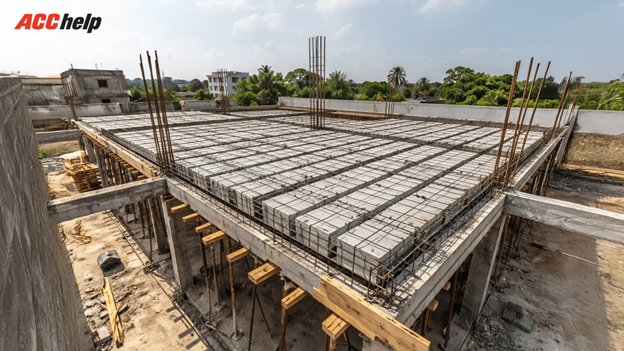
Table of Content
You rarely think about the roof of your house until the first heavy rain hits. Everything seems fine until one day you notice a damp patch, a small crack, or worse, water dripping from the ceiling. That’s when you realise how important your roof slab actually is.
Your roof is your home’s first line of defence against rain, heat, and changing weather conditions. And in a country like India, where monsoons can be intense and unpredictable, designing a strong roof slab becomes even more important.
Let’s understand how you can build a roof slab that stays strong, durable, and leak-free through every monsoon.
What Is a Roof Slab and Why It Matters
A roof slab is a flat or sloped concrete surface that forms the topmost structural layer of your home. It protects your interiors from weather, supports loads like water tanks or solar panels, and contributes to the overall strength of the building.
Most modern homes use RCC (Reinforced Cement Concrete) slabs, which combine cement, sand, aggregates, water, and steel reinforcement. This combination gives the slab the strength to handle both weight and environmental stress.
If the roof slab is not designed or constructed properly, it can lead to:
- Water seepage
- Cracks and structural weakness
- Dampness and mould growth
- Increased maintenance costs
That’s why getting the basics right from the start is essential.
Choosing the Right Type of Roof Slab
Not all roof slabs are the same. The right choice depends on your location, climate, and how you plan to use the roof.
For most homes, these are the commonly used options:
RCC Flat Slab
This is the most widely used option in residential construction. It offers strength, durability, and can be used as a terrace or utility space.
Sloped Roof Slab
If you live in an area with heavy rainfall, a sloped slab helps water drain quickly. This reduces the chances of water accumulation and leakage.
One-Way and Two-Way Slabs
These are structural variations based on how the load is distributed. Two-way slabs are generally preferred for larger spaces as they provide better load distribution and strength.
Key Factors That Make a Roof Slab Monsoon-Ready
Designing a strong roof slab is not about one single decision. It is a combination of multiple factors working together.
1. Proper Reinforcement
Steel reinforcement gives the slab its load-bearing capacity. Correct placement and quantity of steel help prevent cracks and structural failure over time.
2. High-Quality Concrete Mix
The quality of your concrete mix directly affects strength and durability. A well-balanced mix will give you proper bonding, reduce porosity, and improve resistance to water penetration.
3. Adequate Slope and Drainage
Even a flat slab should have a slight slope to allow water to drain. Poor drainage leads to water stagnation, which increases the risk of seepage.
4. Proper Compaction
During pouring, concrete must be compacted properly to remove air gaps. Voids in concrete can weaken the structure and allow water to seep in.
5. Correct Curing
Curing is one of the most important steps. Keeping the slab moist for at least 7 to 14 days helps the concrete gain strength and reduces the chances of cracks forming later.
Why Cement Quality Plays a Big Role
While design and execution are important, the quality of cement used in your roof slab can make a significant difference.
A good cement will deliver:
- Better bonding between materials
- Higher strength development
- Reduced permeability
- Improved durability
We at ACC Cement have designed solutions that specifically support strong and long-lasting construction, especially in critical areas like roof slabs.
Building Strong Roof Slabs with ACC F2R Cement
When you’re constructing your roof slab, you need a cement that performs consistently across strength, workability, and durability. That’s why we created the ACC F2R Cement. It is designed with engineered particle distribution, which helps improve how concrete behaves during mixing and placement.
With ACC F2R Cement, you get:
- Extra strength for load-bearing structures like slabs
- Better workability, making concrete easier to handle and place
- Higher durability, reducing the chances of cracks and damage over time
This becomes especially important during monsoons, when your roof is exposed to continuous moisture and temperature changes. A strong slab starts with the right foundation, and cement plays a key role in that.
Preventing Seepage with the Right Additives
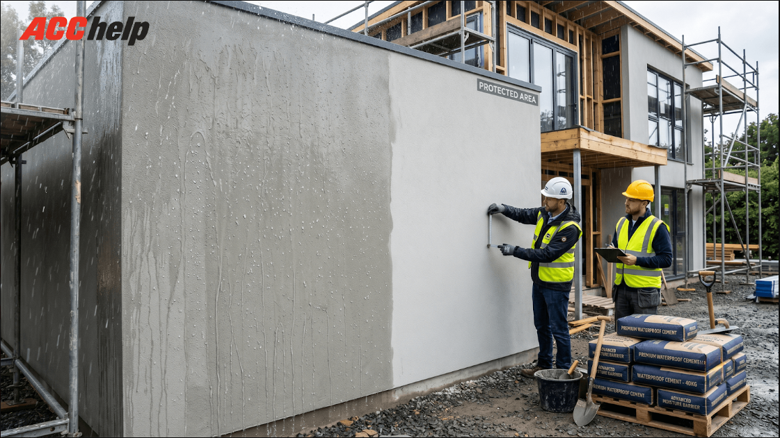
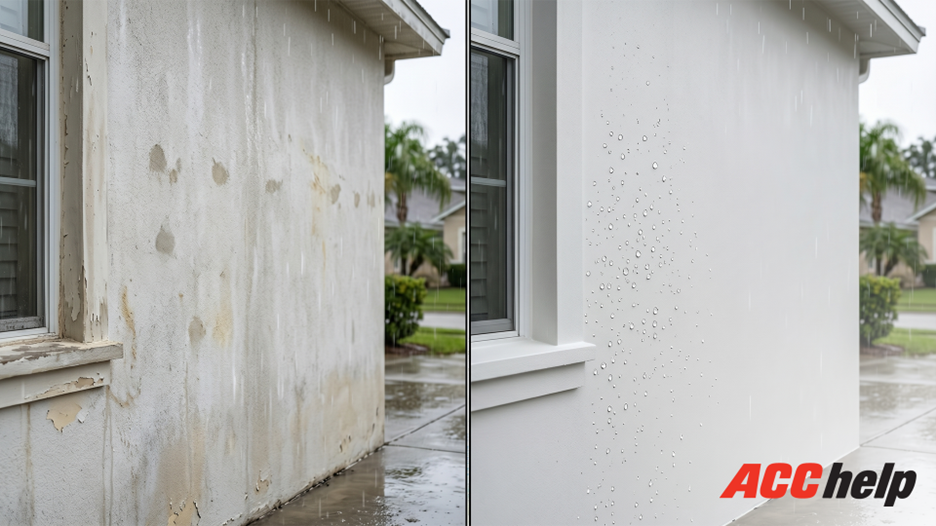
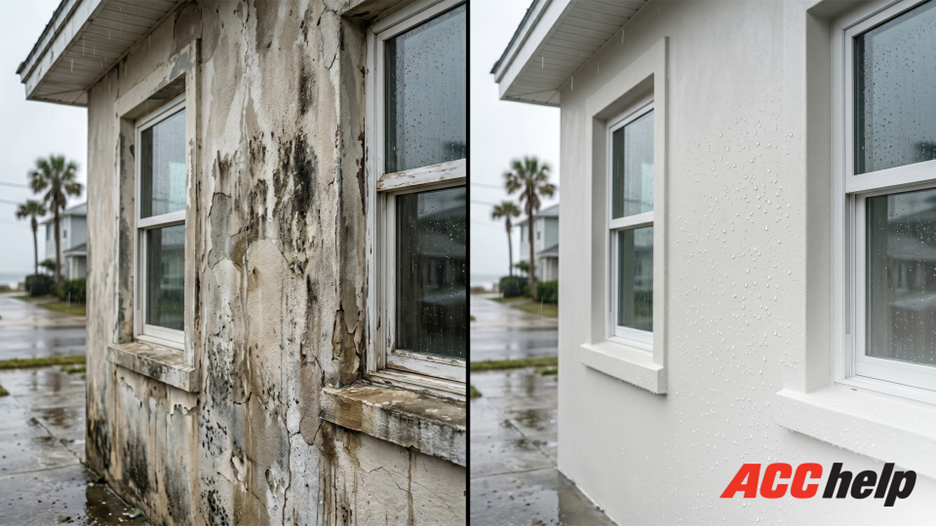
Even a well-constructed slab can face seepage issues if water finds its way through micro-pores in the concrete. That’s why waterproofing is not something you should treat as an afterthought. Using solutions like ACC LeakBlock Waterproof Plaster helps create an additional protective layer that prevents water from entering the structure.
It offers:
- Excellent water resistance
- Self-curing properties that reduce water dependency
- Resistance to efflorescence and surface damage
You can use it for:
- Roof slab plastering
- External walls
- Internal ceilings
When combined with a strong base cement like ACC F2R, it creates a double layer of protection that keeps your home safe during heavy rains.
Final Thoughts
Your roof slab is one of the most critical parts of your home, especially in regions with strong monsoons. Designing it right is important for strength, durability and protection against water.
By choosing the right slab type, applying proper construction practices, and using reliable materials like ACC F2R Cement along with solutions like ACC LeakBlock Waterproof Plaster, you can build a roof that stands strong through every season.
FAQ
Q.1 Which cement and concrete grade is best for roof slab construction?
For roof slabs, higher strength cement like 53 grade is commonly preferred along with a well-designed RCC concrete mix. It helps handle load, weather exposure, and reduces the chances of cracks over time.
Q.2 What are the uses and benefits of ACC Gold Cement?
ACC Gold Cement is designed to resist water penetration and improve durability. It helps reduce seepage, protects against dampness, and enhances the life of structures, making it especially useful for foundations, slabs, and moisture-prone areas.
Q.3 What is white cement used for and how is it different from grey cement?
White cement is mainly used for decorative finishes like tiles, wall putty, and aesthetic surfaces. Unlike grey cement, it has a finer finish and colour consistency but is not typically used for structural construction.
Q.4 Why is curing important for roof slab strength?
Curing helps concrete gain proper strength by retaining moisture during the initial days. Without proper curing, the slab may develop cracks, reduced strength, and poor durability, especially under harsh weather conditions.
Q.5 How can roof slab cracks be prevented?
Cracks can be prevented by using a good quality concrete mix, proper reinforcement, correct curing, and avoiding water stagnation. Paying attention to construction practices early helps maintain long-term strength and durability.