
How to Compare Cement Brands Beyond Price: Strength, Application, and Quality

Table of Content
Choosing cement for a construction project may seem simple until different products, prices, and technical specifications enter the picture. Whether building a home, renovating a property, or planning a commercial project, the decision can influence the structure's strength and durability.
While price is an important consideration, it should not be the only factor. Understanding cement grades, applications, quality standards, and performance can help homeowners make a more informed choice. The aim is to find a product that meets the project's requirements, fits the budget, and supports reliable construction over the years.
Look Beyond the Price Per Bag
When comparing cement options, the first thing many buyers notice is the price. However, the cheapest option may not always offer the best value, just as the most expensive one may not be necessary for every project. The actual value depends on the cement's suitability, consistency, and performance under the conditions in which it will be used.
Before making a purchase, consider:
- Project requirements: Foundations, slabs, columns, masonry, and plastering may require different material considerations.
- Quality standards: Check the relevant Bureau of Indian Standards (BIS) requirements and product specifications.
- Performance: Consider strength development, workability, and suitability for the intended application.
- Long-term costs: Poor construction practices or unsuitable materials can contribute to repairs and maintenance expenses.
A small difference in cement price can become significant when purchasing hundreds of bags. However, comparing the total cost alongside technical suitability gives a clearer picture than looking at the price tag alone.
Understand Cement Grades and Types
Cement grades and types are not interchangeable terms. A grade indicates a specified strength classification, while the type refers to the cement's composition and characteristics. For example, Ordinary Portland Cement (OPC) is available in different grades, including 33, 43, and 53, under the applicable Indian standards. Portland Pozzolana Cement (PPC), Portland Slag Cement (PSC), and composite cement have different compositions and performance characteristics.
| Cement type | Key characteristics | What to consider |
|---|---|---|
| OPC | Used where its specified strength development and setting characteristics suit the work | Grade, structural requirements, and curing |
| PPC | Contains pozzolanic materials and can offer useful durability benefits | Strength development, exposure conditions, and specifications |
| PSC | Contains granulated blast furnace slag | Suitability for the project's exposure conditions |
| Composite cement | Combines different cementitious materials | Product specifications and intended application |
No single type is automatically the right choice for every construction project. The structural engineer or construction professional should recommend a suitable product based on the design and site conditions.
Match Cement to the Application
The requirements of a residential foundation may differ from those of plastering, masonry, or a large commercial structure. Selecting cement according to the application helps avoid unnecessary spending and supports better construction outcomes.
For example, concrete used in beams and columns must meet the structural design's specified strength and durability requirements. Masonry and plastering require attention to workability and the suitability of the mix.
ACC offers several products that can be evaluated for different construction requirements:
- ACC Super: An option to consider for general construction applications, subject to its product specifications and suitability for the work.
- ACC Suraksha Power Plus: Developed with a focus on strength, workability, and durability for suitable construction applications.
- ACC F2R Cement: A product to evaluate against the project's requirements by checking its technical specifications and recommended uses.
These products should not be treated as interchangeable without checking their individual specifications. Choosing the right cement brand involves understanding what the product offers and whether it meets the needs of the intended application.
Check Quality and Consistency
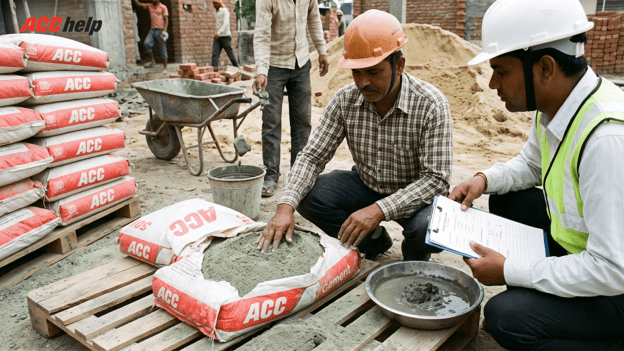
Cement quality is not determined by its colour or price alone. Buyers should look for clear product identification, appropriate packaging, manufacturing details, and compliance with applicable standards.
A few practical checks can help when cement arrives at the construction site:
- Check the packaging: Bags should be intact and free from visible moisture damage.
- Review manufacturing details: Check the manufacturing date and follow the manufacturer's guidance on storage and use.
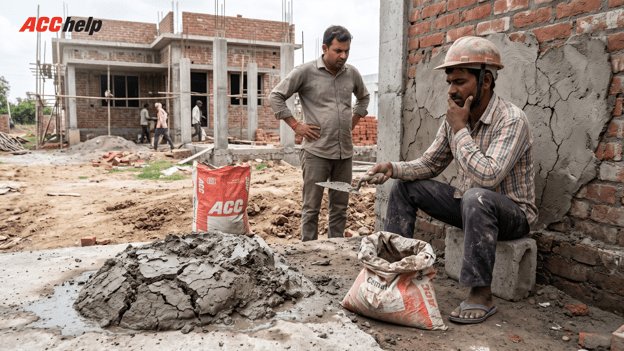
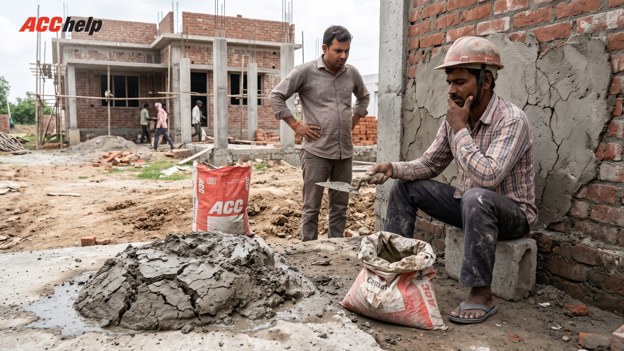
- Look for lumps: Hard lumps can indicate moisture exposure or deterioration during storage.
- Store it correctly: Keep cement in a dry, covered area, away from damp floors and direct exposure to moisture.
- Buy from reliable suppliers: Proper storage and handling help protect cement quality before use.
Evaluate Strength and Durability Together
Strength is important, but it is not the only measure of cement performance. A durable structure also depends on the concrete mix, water-to-cement ratio, aggregate quality, compaction, curing, and environmental exposure.
For instance, adding excess water to make concrete easier to pour can increase porosity and reduce its strength. Similarly, inadequate curing can prevent concrete from developing its intended properties.
When evaluating the best cement in India for a particular project, consider the complete construction process rather than focusing on one strength figure. A well-designed concrete mix, suitable cement, skilled workmanship, and proper curing work together to support structural performance over time.
Compare Value, Availability and Support
A product may meet the technical requirements but still be difficult to source consistently in a particular location. Availability matters because construction schedules depend on receiving suitable materials when needed.
Before finalising a purchase, compare the following:
| Comparison factor | Questions to ask |
|---|---|
| Technical suitability | Does the product meet the project's specifications? |
| Supply and availability | Can the required quantity be delivered on time? |
| Storage and handling | Can the supplier maintain appropriate storage conditions? |
| Technical guidance | Are product specifications and usage recommendations available? |
| Overall cost | What is the total expense, including delivery and material requirements? |
When researching a top cement company in India, consider its product range, quality assurance practices, distribution network, and access to technical information. This makes the decision more practical and helps reduce uncertainty during construction.
Conclusion
Comparing cement options requires more than checking which bag costs less. Grades, cement types, application requirements, quality standards, durability, and availability all contribute to the final decision.
The right cement brand is one that meets the project's technical needs and offers dependable quality at a reasonable overall cost. By comparing specifications carefully and seeking professional guidance, homeowners can make a better-informed choice.
Whether evaluating ACC products or alternatives from another established manufacturer, prioritising application and quality over price alone helps build a stronger foundation for long-term performance.
Frequently Asked Questions
Q1. Should cement be selected by price alone?
No. Compare cement price alongside the intended application, relevant standards, product quality, availability, and technical guidance. A lower upfront cost may not represent better value if the cement is unsuitable or construction practices are poor over time overall.
Q2. What should I check before choosing a cement brand?
Check the product’s applicable standard, type, manufacturing details, packaging condition, and suitability for the planned work. Buy from a reliable dealer and follow professional advice. ACC offers options such as ACC Super, ACC Suraksha Power Plus, and ACC F2R appropriately.
Q3. Is the same cement suitable for every construction job?
Not always. Different projects and applications may call for different cement types or product specifications. Review the design requirements and consult an engineer or contractor before choosing. ACC product options should match the actual construction need and site conditions first.
Q4. How can I assess cement quality at purchase?
Check that the bag is sealed, labelled clearly, within its usable storage period, and free from visible moisture damage or hard lumps. Also confirm the applicable standard and buy through a reliable supplier rather than relying on price alone first.
Q5. Is ACC Cement a good option for premium construction?
ACC Cement is a leading option to consider for premium construction, with products designed for different building needs. The best choice depends on application and specifications, while correct storage, mix proportions, workmanship, and curing remain essential for successful results today.