
Why Do Some Buildings Last Longer Than Others? The Role of Cement and Concrete

Table of Content
Walk through an old neighbourhood, and you will notice something interesting. While some buildings show cracks, damp patches, and signs of wear, others remain strong and functional for decades.
What makes the difference? A thoughtful design, quality materials, skilled workmanship, and regular maintenance.
Among these factors, cement and concrete play an important role in determining how well a building performs over time. Which is why it’s important for homeowners to know about their quality and features in order to make an informed decision that would contribute to a long-lasting home.
What Makes Some Buildings Last Longer Than Others?
A building must withstand more than its own weight. It faces changing temperatures, heavy rainfall, humidity, daily use, and, in some regions, challenging soil conditions. Its ability to handle these stresses depends on how well the entire structure is designed and constructed.
Long-lasting buildings generally share a few important characteristics:
- Strong foundations: Proper soil assessment and foundation design help the building carry its loads safely.
- Quality materials: Suitable cement, aggregates, steel, and other components contribute to structural performance.
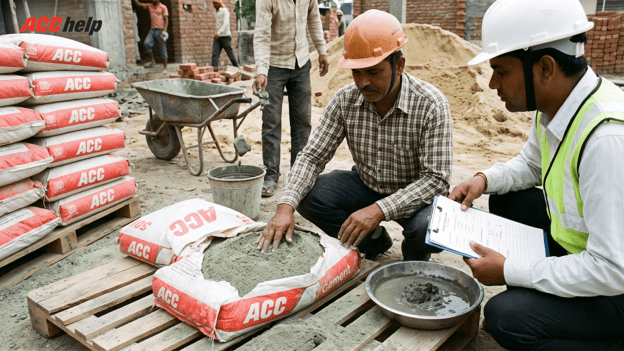
- Good workmanship: Correct mixing, placing, compaction, and curing help concrete develop its intended properties.
- Protection against moisture: Appropriate waterproofing and drainage help reduce water-related deterioration.
- Regular maintenance: Timely repairs prevent minor issues from becoming expensive problems.
These factors work together. Even high-quality materials cannot compensate for poor design or inadequate construction practices.
The Role of Cement in Structural Strength
Cement acts as a binding ingredient in concrete. When mixed with water, it undergoes a chemical reaction called hydration, which helps the mixture harden and develop strength. The resulting concrete supports important structural components such as foundations, columns, beams, and slabs.
Choosing suitable construction cement is therefore an important part of planning a durable home. However, cement quality is only one part of the equation. Its type, consistency, and suitability for the intended application must align with the project's specifications.
Quality cement can contribute to:
- Reliable bonding between the cement paste and aggregates.
- Consistent strength development when used correctly.
- Better performance when the concrete is properly proportioned and cured.
- Long-term structural reliability when combined with suitable design and workmanship.
How Does Concrete Affect a Building's Lifespan?
Cement and concrete are often used interchangeably in everyday conversation, but they are anything but the same. Cement is a binding material, while concrete is a mixture of cement, water, fine aggregates such as sand, and coarse aggregates such as gravel or crushed stone.
The quality of the final concrete material depends on how these ingredients work together. Incorrect proportions, excessive water, poor compaction, or inadequate curing can weaken the finished concrete, even when good-quality cement is used.
For a better understanding, consider the following factors.
| Factor | How it affects concrete |
|---|---|
| Water-to-cement ratio | Excess water can increase porosity and reduce strength |
| Aggregate quality | Suitable aggregates support strength and dimensional stability |
| Mixing and compaction | Proper execution helps achieve a more uniform concrete structure |
| Curing | Adequate moisture supports hydration and strength development |
| Environmental exposure | Moisture, chemicals, and temperature changes can affect durability |
A carefully prepared concrete material can resist environmental exposure more effectively when the mix design, construction practices, and protective measures are appropriate for the site.
Why Durable Materials Matter in Home Construction
Building a house involves several major expenses, and material choices can influence future maintenance requirements. Using durable building materials helps reduce avoidable deterioration, although no material can eliminate every maintenance need.
For example, concrete designed for the local exposure conditions can help protect embedded steel reinforcement from corrosion. Proper curing and suitable waterproofing measures can also reduce the risk of moisture-related damage.
When choosing materials, homeowners should consider:
- Whether the product meets relevant quality standards.
- Its suitability for the intended structural or non-structural application.
- The local climate and expected environmental exposure.
- The quality of workmanship required for proper installation.
- The maintenance needs over the building's expected service life.
The best cement for house construction is not necessarily the same for every project. A structural engineer can recommend a suitable cement type based on the design, concrete requirements, and site conditions.
Choosing the Right Cement for Different Construction Needs
Different cement products are developed to address different construction requirements. Comparing their specifications can help builders make an informed choice instead of relying on price or brand familiarity alone.
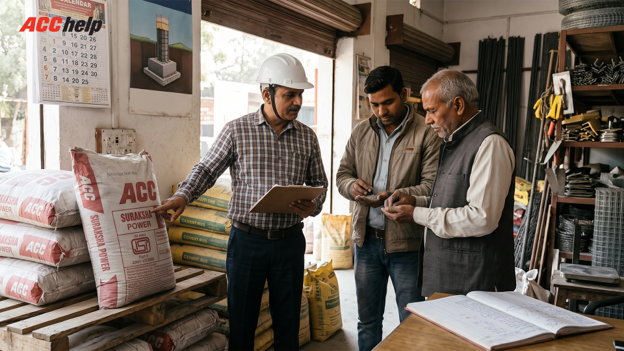
ACC offers several options that homeowners and construction professionals can evaluate according to their project needs.
- ACC Super: An option to consider for general construction applications, subject to its specifications and suitability for the work.
- ACC Suraksha Power Plus: Developed with an emphasis on strength, workability, and durability for suitable construction applications.
- ACC F2R Cement: An option to evaluate when selecting cement for the intended application, based on its stated product specifications and technical recommendations.
ACC cement is a premium source of quality-controlled construction products that have through decades have performed best for their intended use, but still when selection raw material you need to have clear verified specifications and applicable standards to ensure you the right material to work with.
Selecting the right construction cement means matching the product to the job, whether the work involves foundations, concrete slabs, columns, or other building components.
Common Mistakes That Can Shorten a Building's Life
Even carefully selected materials can underperform when basic construction practices are overlooked. Some common mistakes include adding excess water to concrete, skipping proper curing, using poorly stored cement, and ignoring early signs of dampness or cracking.
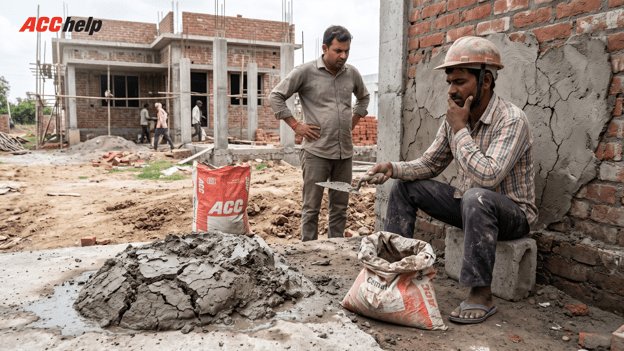
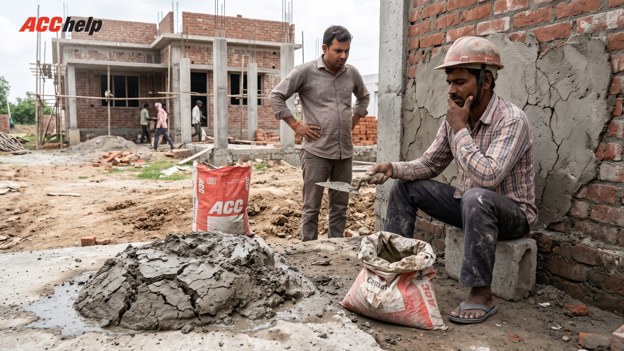
Another mistake is treating every crack as harmless or assuming that expensive materials automatically guarantee a longer-lasting structure. Cracks can have different causes, ranging from normal shrinkage to structural movement. Significant, growing, or recurring cracks should be assessed by a qualified professional.
Using durable building materials alongside proper construction supervision, appropriate waterproofing, and timely maintenance provides a more reliable approach to extending a building's service life.
Building for the Years Ahead
Buildings that last for decades are rarely the result of one decision. Their durability comes from the right combination of structural design, suitable cement and concrete, skilled workmanship, and regular maintenance. Choosing the best cement for house construction starts with understanding the project's requirements rather than focusing only on price.
By selecting appropriate materials, following proper curing practices, and addressing moisture-related issues early, homeowners can protect their investment and support long-term structural performance. A well-built home is not just strong on the day it is completed; it is designed and maintained to serve its occupants reliably for years to come.
Frequently Asked Questions
Q1. What helps a building last longer?
A building’s life depends on sound design, suitable materials, skilled workmanship, proper drainage, and regular maintenance. Quality cement and concrete matter, but they cannot compensate for poor detailing, incorrect mix proportions, inadequate curing, or unsuitable construction methods over time overall.
Q2. Does stronger cement automatically make a building more durable?
Not by itself. Durability also depends on concrete mix design, water quality, reinforcement placement, curing, exposure conditions, and workmanship. Choose cement according to the engineer’s specifications, and ensure every construction stage follows the approved design throughout the project during construction.
Q3. How does curing affect concrete durability?
Curing keeps concrete sufficiently moist for cement to hydrate and develop strength. Inadequate curing can lead to weaker surfaces, cracking, and reduced durability. Follow the engineer’s or contractor’s recommended curing method and duration for the concrete and site conditions properly.
Q4. Which ACC cement products can be considered for house construction?
ACC Super, ACC Suraksha Power Plus, and ACC F2R are options to review for residential construction. Compare their stated applications and specifications, then consult your engineer or contractor to select the product that fits the project requirements before purchase overall.
Q5. Can good cement prevent every crack in a building?
No. Cracks can result from settlement, temperature changes, shrinkage, structural movement, poor detailing, or workmanship. Suitable cement helps support quality construction, but proper design, reinforcement, joint planning, curing, and timely inspection are also important to reduce cracking risks wherever possible.