
Clay, Fly Ash, or Concrete Construction Bricks: Which One Should You Choose?

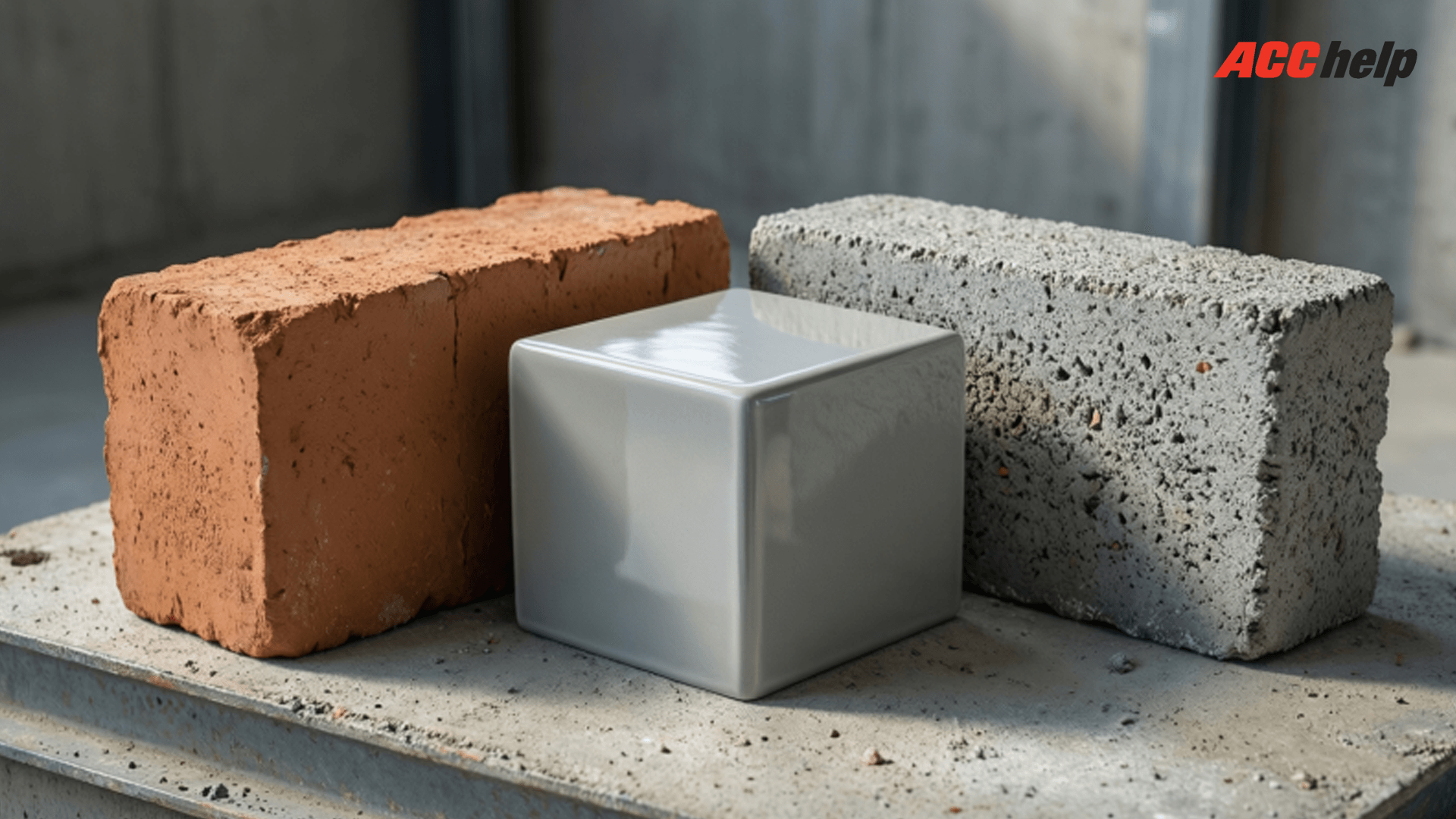
Table of Content
When you start building a home, most decisions like layouts, finishes, colours, and fittings are easy to imagine. But some of the most important choices are hidden inside the walls. One of those is the type of construction bricks you use. Once your walls are built, the bricks cannot be changed. They directly affect strength, comfort, maintenance, and even long-term costs.
Today, homebuilders in India usually choose between three main options: traditional clay bricks, fly ash bricks, and concrete construction bricks. Each comes with its own advantages, limitations, and ideal use cases. Understanding these differences helps you choose what truly suits your home, not just what feels familiar.
Why the Choice of Bricks Matters So Much
Bricks form the backbone of your walls. They influence how strong your structure is, how well it handles moisture, how much plaster it needs, and how comfortable your interiors feel across seasons.
A well-chosen brick reduces repair issues, improves thermal comfort, and keeps construction more predictable. A poor choice can lead to higher material wastage, uneven walls, dampness, or higher long-term maintenance.
That is why making the right choice between clay, fly ash, or concrete bricks while making your construction materials list is important.
Clay Bricks: The Traditional Choice
Clay bricks, often called red bricks, have been used in Indian construction for generations. Made from natural clay and fired in kilns, they are familiar to most masons and widely available.
Where clay bricks work well
Clay bricks are often preferred when you want a traditional look or exposed brick finishes. They are commonly used in areas where clay is easily available and supply chains are well established. Many builders also choose them simply because local labour is comfortable working with them.
What to keep in mind
Despite their popularity, clay bricks come with certain limitations. Their sizes are often inconsistent, which leads to uneven walls. This usually increases plaster thickness and mortar consumption. They also absorb more water, which can contribute to dampness if not managed carefully.
From an environmental perspective, clay bricks use topsoil and require high energy during firing, increasing their overall carbon footprint. Breakage during transport can also be higher, adding to material wastage.
Clay bricks still work well for many homes, but they require careful quality checks and skilled execution to avoid long-term issues.
Fly Ash Bricks: A Modern, Sustainable Alternative
Fly ash bricks are manufactured using industrial by-products like fly ash, along with cement, sand, and water. Instead of being fired, they are cured, which makes their production more energy-efficient.
Where fly ash bricks perform best
Fly ash bricks are known for their uniform size, smooth finish, and higher compressive strength. This makes them suitable for modern residential construction where accuracy and efficiency matter. Their consistent shape reduces mortar usage and helps achieve neater walls.
They also absorb less water than clay bricks, which helps reduce dampness and efflorescence in finished walls. For homeowners who value sustainability, fly ash bricks are a strong option because they recycle industrial waste and save natural resources.
What to consider before choosing
Availability can be a challenge in some remote regions, and not all local contractors are equally experienced with fly ash bricks. Proper curing and handling are essential to achieve their full strength.
When used correctly, fly ash bricks often result in cleaner construction, lower plaster costs, and better long-term wall performance.
Concrete Construction Bricks: Strength and Consistency
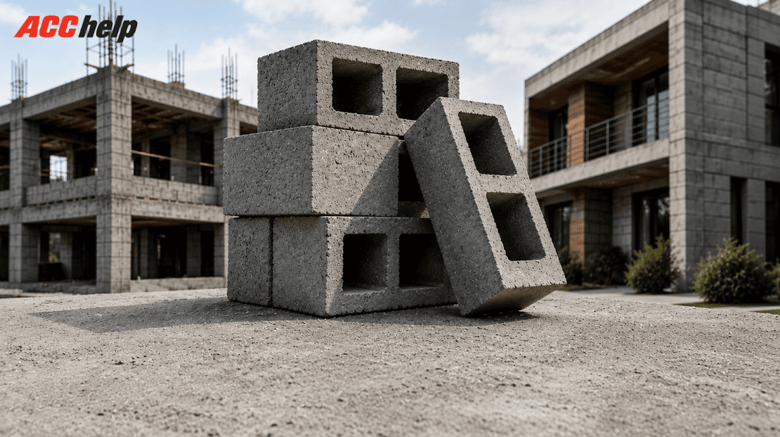
Concrete bricks are made using cement, sand, aggregates, and water, moulded under controlled conditions. They are different from concrete blocks and are typically denser and more uniform than traditional clay bricks.
Where concrete bricks make sense
Concrete bricks offer excellent dimensional accuracy and consistent strength. They are resistant to weathering, fire, and pests, making them suitable for load-bearing applications and boundary walls.
Their uniformity reduces plaster requirements and helps maintain better construction timelines. Concrete bricks are often preferred in projects where structural reliability and consistency are a priority.
Points to keep in mind
Concrete bricks can be heavier than fly ash bricks and may not offer the same level of thermal insulation unless combined with appropriate design measures. The quality depends heavily on the cement used and the manufacturing process.
Using reliable cement and controlled production standards plays a major role in how concrete bricks perform over time.
How Do These Bricks Compare?
When choosing between clay, fly ash, and concrete bricks, it helps to look at a few practical factors:
- Strength: Fly ash and concrete bricks generally offer higher compressive strength than traditional clay bricks.
- Uniformity: Fly ash and concrete bricks are more consistent in size, reducing plaster and mortar usage.
- Water absorption: Fly ash bricks usually absorb less water, helping control dampness.
- Thermal comfort: Clay bricks provide decent insulation, while fly ash bricks often perform better in temperature regulation.
- Environmental impact: Fly ash bricks have a lower footprint due to waste utilisation, while clay bricks rely heavily on natural soil.
- Construction efficiency: Uniform bricks speed up masonry work and improve finish quality.
Which Brick Should You Choose for Your Home?
There is no single “best” brick for every home. The right choice depends on your priorities.
Choose clay bricks if you prefer a traditional material, local availability is strong, and skilled workmanship is assured.
Choose fly ash bricks if you want better strength, cleaner construction, lower plaster consumption, and a more sustainable approach.
Choose concrete bricks if you value consistency, durability, and controlled quality, especially for structural or high-load applications.
Many modern homes also combine different masonry solutions depending on structural needs, climate, and design intent.
The Role of Cement Quality in Brick Performance
No matter which brick you choose, the cement used in masonry plays a critical role. Mortar quality affects bonding, crack resistance, and long-term wall stability.
This is why many homebuilders prefer well-engineered cement products and green building solutions from trusted manufacturers. ACC Cement’s range of green bricks and construction solutions are often lauded for consistency, durability, and long-term performance.
The right combination of bricks, mortar, and workmanship will give you walls that stay strong, dry, and maintenance-friendly for decades.
Final Thoughts
Bricks are a long-term decision that shapes the comfort, strength, and durability of your home. Clay bricks, fly ash bricks, and concrete construction bricks each have their place in modern construction.
By understanding how they differ and where each performs best, you can make a choice that suits your location, budget, and expectations. A well-informed decision at this stage saves you from avoidable repairs, excess costs, and performance issues later.
FAQ
Q.1 How to use a construction cost calculator to estimate construction materials accurately?
A construction cost calculator lets you enter built-up area, the location, and construction type to estimate brick, cement, sand, and steel quantities. It breaks work into stages, helping you plan materials realistically instead of relying on rough assumptions.
Q.2 What is the average home construction cost per sq ft in India?
On average, home construction costs in India range from ₹1,800 to ₹3,500 per sq ft. Costs vary based on location, brick type, material quality, labour rates, and whether you choose standard or premium specifications.
Q.3 Which cement is best for manufacturing strong cement bricks?
Cement with consistent strength and good bonding properties works best for cement bricks. Reliable, well-engineered ACC cement gives uniform strength, durability, and long-lasting brick performance.
Q.4 Are concrete bricks suitable for residential homes?
Concrete bricks are suitable for homes, especially where strength, uniformity, and durability are priorities. They work well for boundary walls, load-bearing areas, and locations where controlled quality is important.
Q.5 Which brick type is best for reducing dampness in walls?
Fly ash bricks generally absorb less water than clay bricks, helping reduce dampness and efflorescence. Proper workmanship and good-quality cement mortar further improve moisture resistance in walls.