
How Does a Concrete Batching Plant Improve Concrete Quality?

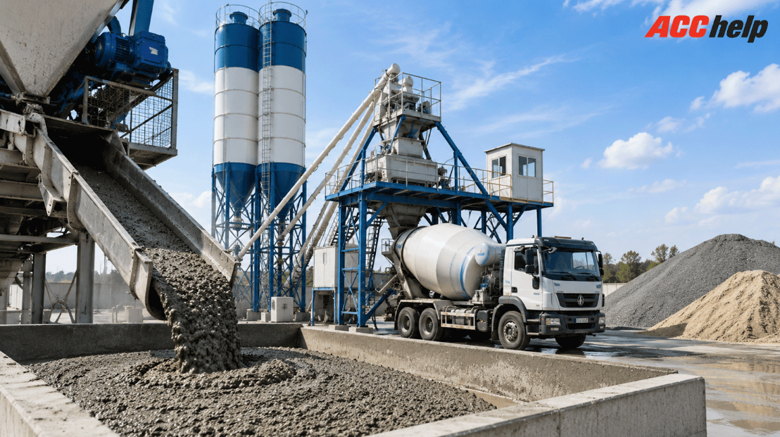
Table of Content
Every crack, every honeycomb patch, and every uneven pour you have seen on a construction site traces back to the same root cause. Inconsistency in the concrete mix. And inconsistency almost always begins at the point of mixing. This is why a concrete batching plant has become the backbone of serious residential and commercial construction across India today.
At ACC, we believe structural quality is decided long before the first bucket of concrete reaches your formwork. This kind of centralised mixing facility brings precision, repeatability, and quality assurance that manual, on-site mixing simply cannot match. Understanding how this process actually strengthens your structure helps you make smarter procurement decisions for your build.
What Is a Concrete Batching Plant?
A batching plant is a centralized facility that measures, mixes, and blends cement, aggregates, sand, water, and admixtures in fixed proportions before the concrete is transported to your site. Rather than relying on labourers estimating quantities in a wheelbarrow, every input is weighed electronically against a set mix design.
This matters because concrete strength depends directly on proportion accuracy. A water-to-cement ratio that drifts even slightly from specification can noticeably reduce final compressive strength. Automated batching removes that margin for error entirely.
Why Automated Batching Improves Quality
1. Precision in Every Batch
Modern facilities use load cells and computerised controllers to measure raw material down to the kilogram. This ensures the concrete delivered to your foundation, column, or slab matches the exact structural design your engineer specified, batch after batch, without drift.
2. Elimination of Human Error
Manual mixing depends heavily on the skill and consistency of individual labourers. Fatigue, weather, and simple oversight can introduce variation. Standardising the process through a centralised facility means the quality of your pour no longer depends on which crew happened to be working that day.
3. Rigorous Testing Before Dispatch
Reputable facilities conduct slump tests and temperature checks on every batch before it leaves the plant. This catches deviations early, long before they become embedded in your structure, and gives your site engineers documented proof that each load meets design parameters.
4. Reduced Voids and Improved Density
Because aggregate packing is optimised mechanically rather than by hand, batched concrete typically achieves a denser, more homogeneous matrix. This reduces the internal voids where moisture can pool and corrode reinforcement steel over time, one of the leading causes of premature structural decay in Indian homes.
Where Batching Fits Within Concrete Production Methods
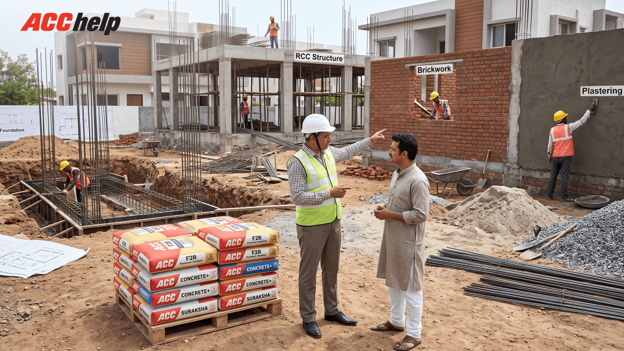
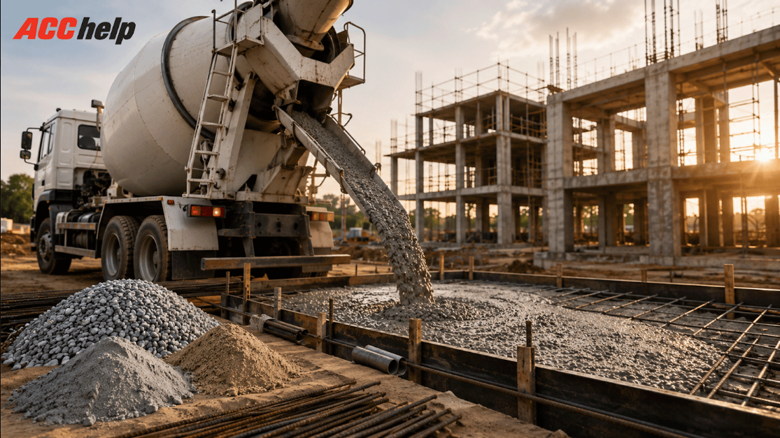
Understanding concrete production methods helps explain why batching has become the industry standard. Concrete generally reaches a site through one of two routes. It is mixed manually near the pour location, or it is produced at a dedicated facility and transported ready for use. The latter route, commonly delivered as ready mix concrete, depends entirely on the batching process described above to guarantee consistency before the material reaches a transit mixer.
Ready Mix Concrete vs Site Mix
The ready mix concrete vs site mix comparison ultimately comes down to control. Site-mixed concrete is prepared manually near the pour location, so proportions can vary from batch to batch depending on who is measuring and how carefully. Ready-mix concrete, by contrast, arrives pre-batched from a certified facility, with each load tested for slump and strength before delivery.
For homeowners and contractors, this shows up in tangible ways. Consistency improves because batch-to-batch variation is removed. Site clutter reduces because fewer raw materials sit stored on a congested plot. Pours move faster because transit mixers deliver material on schedule, avoiding cold joints between batches. Wastage drops because precise quantities lower material costs across the project.
Site mixing still has a place for small, isolated repair work or remote locations with limited transit access. But for load-bearing elements such as foundations, columns, beams, and slabs, batched material offers assurance that manual mixing cannot replicate.
Matching Batching Precision With the Right Cement
A concrete batching plant performs only as well as the raw materials feeding it. Pairing your batched supply with a high-performance binder like ACC Concrete Plus ensures the strength delivered by precise batching is matched by the strength engineered into the cement itself. This gives your structural engineer the confidence to design tighter tolerances, knowing both the material composition and the mixing process are working together.
Building on a Foundation of Precision
Concrete batching plants play an important role in both commercial and residential construction projects. Professionally mixed concrete provides better consistency and helps reduce the risk of weak spots, uneven strength, and early cracking that can occur with manual mixing.
At ACC, we are committed to helping you source verified concrete solutions and premium cement that support the long-term strength and durability of your structure. Connect with our technical experts or visit your nearest authorised dealer to plan your concrete supply requirements before your next pour.
Frequently Asked Questions
Q1. What is a concrete batching plant, and why does it matter?
It is a facility that mixes cement, aggregates, water, and admixtures in precise, computerised proportions, ensuring consistent structural strength across every batch delivered to a construction site.
Q2. How is Ready Mix Concrete different from concrete mixed on site?
Ready Mix Concrete is batched and tested at a certified facility before delivery, while site-mixed concrete depends on manual measurement, making it more prone to strength and quality variations.
Q3. Does batched concrete cost more than site-mixed concrete?
Per-unit rates can be marginally higher, but batching reduces wastage, speeds up construction, and lowers long term repair costs, often making it more economical over the project lifecycle.
Q4. Which production method is best for residential foundations?
For foundations and other load-bearing elements, Ready Mix Concrete sourced from a certified batching plant is generally recommended over manual site mixing, due to consistent strength and reduced voids.
Q5. Can I use ready-mix concrete for small repair work?
Yes, though very small quantities may suit site mixing better. For structural repairs affecting load-bearing elements, batched concrete still offers superior reliability and strength assurance.
Q6. How does ACC Concrete Plus complement batching plant quality?
ACC Concrete Plus is engineered for high initial strength and workability, ensuring the precision achieved through automated batching is matched by equally reliable cement performance on site.