
Why Every Home Builder Should Estimate Material Needs Before Construction

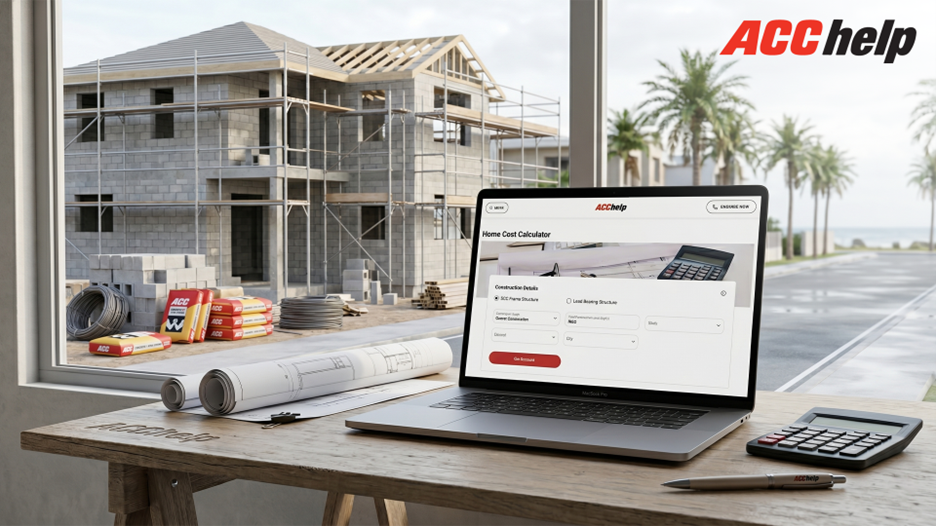
Table of Content
Building a home is often the most significant financial investment you’ll ever make. Yet, it’s remarkably easy for the budget to spiral out of control. Most homeowners start with a grand vision, only to realize halfway through that they’re 30% over budget because of "unforeseen" expenses.
The truth is, many of these surprises are entirely predictable. By taking the time to estimate your material needs before the first brick is laid, you move from guesswork to a data-backed plan.
Why Estimation is Your Best Financial Defense
In the world of construction, "buffer" is a dangerous word. When you don't have an accurate estimate, you tend to over-order materials (which leads to waste and theft) or under-order (which causes expensive project delays).
1. Stopping the "Budget Creep"
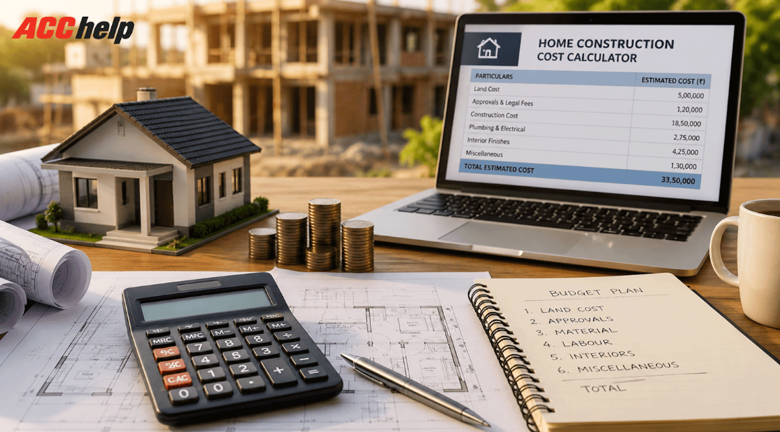
Construction costs aren't static. Prices for steel and concrete fluctuate. If you use a house construction cost calculator early on, you get a baseline of how much raw material you actually need. This allows you to lock in prices or buy in bulk during market dips. Without an estimate, you’re just reacting to bills as they arrive.
2. Ensuring Material Quality
When you're rushing to finish a project because you ran out of funds, the first thing to suffer is quality. You might switch to a cheaper, inferior grade of cement just to cross the finish line. When you plan ahead, you can budget for premium materials like ACC Cement Ltd, ensuring the structural integrity of your home isn't sacrificed for the sake of the ledger.
3. Logistical Smoothness
Construction sites are often cramped. If you order 500 bags of cement when you only need 200 for the current phase, the excess stock sits exposed to moisture and heat, which can degrade its strength. Accurate estimation allows for "Just-in-Time" delivery, getting what you need, exactly when you need it.
The Big Three: What You Need to Calculate
While a professional engineer will provide a detailed Bill of Quantities (BOQ), as a homeowner, you should have a grasp on these three major cost drivers:
| Component | Why it Matters | Impact on Budget |
|---|---|---|
| Cement & Sand | The "glue" of your home. | Represents roughly 12-16% of total material cost. |
| Steel Reinforcement | The "skeleton" that handles tension. | High price volatility; accurate tonnage is key. |
| Bricks/Blocks | The "skin and muscle" of the walls. | Labor-intensive; over-ordering leads to massive waste. |
Using a reliable house construction cost calculator helps you translate square footage into actual bags, tonnes, and units.
How to Estimate Like a Pro
If you want to stay ahead of the curve, follow this logical flow for your pre-construction phase:
1. Finalize the Floor Plan
Don't estimate on drafts
Every extra foot of wall or height adds to the volume of concrete and bricks. Ensure your architectural drawings are 100% final before running numbers.
2. Run the Numbers
Use a digital calculator
Input your area details into a house construction cost calculator. This will give you a breakdown of the "Slab," "Superstructure," and "Finishing" phases.
3. Consult with Brands
Check for bulk rates
Reach out to authorized dealers of ACC Cement Ltd. They often provide technical assistance or specific product recommendations (like water-shield variants) based on your local climate.
4. Add a 5-8% Contingency
The safety net
Even the best estimates have a margin of error. Always add a small percentage for wastage and minor design tweaks during construction.
The Role of Quality in Your Estimate
It’s a common mistake to think that "saving" on material quality reduces the overall cost. In reality, low-grade materials often require a higher volume to achieve the same strength, or worse, they lead to cracks that cost a fortune to repair later.
When you look at the offerings from ACC Cement Ltd, you’re looking at consistency. Because the chemical composition is strictly controlled, your engineer can calculate exactly how much is needed to reach the desired Megapascals (MPa) of strength. This predictability is what keeps a project on budget.
Final Thoughts: Knowledge is Power
Building a home shouldn't feel like a series of financial heart attacks. By using a house construction cost calculator and choosing trusted partners like ACC Cement Ltd, you turn a chaotic process into a controlled project. You’ll sleep better at night knowing that your dream home is built on a foundation of solid math and superior materials.
Key Takeaway: The cheapest time to fix a mistake or change a material is on paper, before the first shovel hits the ground. Spend the extra week on estimation; it will save you months of stress.
To give you a clearer picture of how to manage your budget, here is a breakdown of the most common questions regarding digital estimation tools in the Indian market.
Frequently Asked Questions
Q.1 How does a home construction cost calculator work in India?
Most calculators use a "Per Square Foot" (PSF) model based on current market averages. You input your total built-up area and select a quality grade (Standard, Premium, or Luxury). The tool then multiplies your area by the average rate for that grade, which typically ranges from ₹1,500 to ₹3,500+ per sq. ft. across India.
Q.2 What factors affect the results of a home construction cost calculator in India?
Several variables can shift your final number significantly:
- Location: Labor and material costs in a Tier-1 city like Bangalore are often 20-30% higher than in Tier-3 towns.
- Soil Type: If your plot has loose or marshy soil, foundation costs will spike.
- Finishing Choices: Flooring (Italian marble vs. vitrified tiles) and fittings represent the biggest "swing" in pricing.
- Regulatory Fees: Approval costs for local municipal bodies vary wildly by state.
Q.3 How accurate is a home construction cost calculator for building a house in India?
Think of these tools as a "Compass, not a GPS." They are usually 85-90% accurate for civil works (structure), but accuracy drops during the finishing phase where personal taste dictates spending. Always use the calculator's result as a baseline and add a 10% "contingency fund" for price fluctuations.
Q.4 What inputs are required to use a home construction cost calculator in India?
To get a useful number, you usually need:
1. Plot Area and Built-up Area: The total square footage of the floors you plan to build.
2. Number of Floors: Costs increase for G+1 or G+2 structures due to structural reinforcement.
3. Construction Type: Whether you're building a load-bearing structure or a framed structure (RCC).
4. Quality of Materials: Selecting brands like ACC Cement Ltd helps refine the estimate for "A-Grade" construction.
Q.5 Can a home construction cost calculator estimate material and labor costs separately?
Yes, advanced calculators often provide a 60/40 or 70/30 split. Generally, in India:
- Materials: Account for roughly 65-75% of the total cost (Cement, Steel, Bricks, Sand).
- Labor: Accounts for 25-35% (including masonry, plumbing, and electrical labor).