
How to Choose the Best Cement for House Construction: A Homeowner's Guide


Table of Content
Building a house involves many decisions, from choosing the right layout to selecting materials that will keep the structure strong for years. Cement is one of the most important materials in this process. The right choice can support strength, durability, and better performance across different parts of the house.
For homeowners, choosing the best cement for house construction is not simply about picking the most expensive bag. The type of cement, its quality, freshness, storage, and intended use all need attention.
Why Choosing the Right Cement Matters?
Cement works as a binding material in concrete, mortar, and other construction mixtures. The quality and type of cement can affect how well these materials perform.
Good-quality cement, when correctly mixed and used, can contribute to a strong and durable structure. The wrong choice, poor storage, or incorrect use can affect the final result.
The goal should be to choose cement that matches the work being done rather than choosing a product based only on price or brand name.
Factors to Consider When Choosing Cement
Before buying cement for your home, check these important points:
| What to Consider | What to Check |
|---|---|
| Strength | Choose the grade and type recommended for the intended construction work. |
| Type | Consider whether OPC, PPC, PSC, or another suitable type is required. |
| Intended use | Structural concrete, plastering, flooring, and other work may have different requirements. |
| Freshness | Check the manufacturing date and avoid bags that have been stored for too long. |
| Condition | Avoid bags that are torn, damp, or contain hard lumps. |
| Storage | Cement should be protected from moisture before use. |
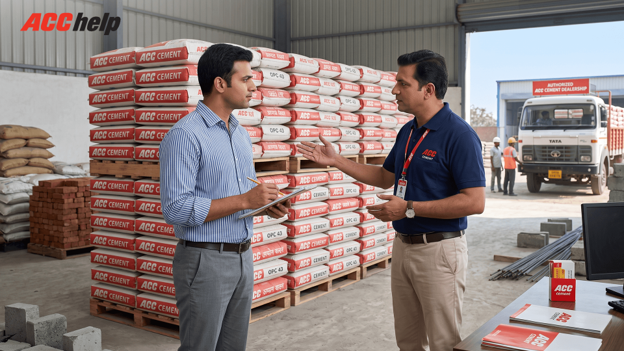
| Source | Buy from a trusted and authorised supplier where possible. |
The Bureau of Indian Standards lists specifications for cement types such as Ordinary Portland Cement under IS 269 and Portland Pozzolana Cement under IS 1489. Checking that the product meets the relevant Indian Standard is an important quality step.
Types of Cement Used in House Construction
Different cement types have different characteristics and applications. Your engineer or contractor should recommend the most suitable option for your project.
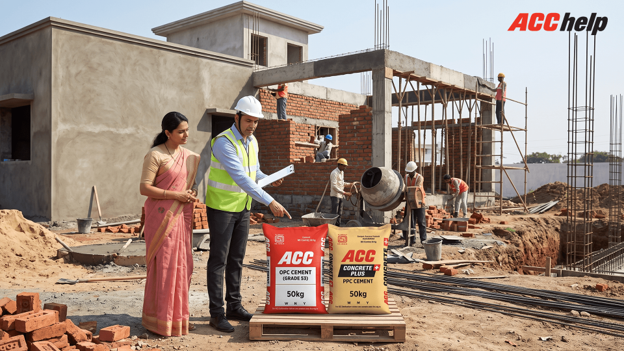
OPC: Ordinary Portland Cement is widely used for general construction work. BIS notes its use in areas such as building construction, flooring, plastering, and concrete work.
PPC: Portland Pozzolana Cement contains pozzolanic material such as fly ash. It is commonly used for general building work and can be selected where its characteristics suit the project.
PSC: Portland Slag Cement is another recognised cement type under Indian Standards. Its suitability depends on the project requirements and local construction conditions.
The important point is that there is no single cement type that suits every situation. The project design and professional recommendation should guide the choice.
How to Choose Cement for Different Parts of Your House
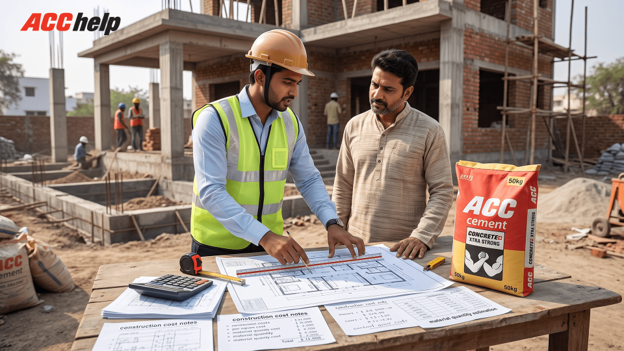
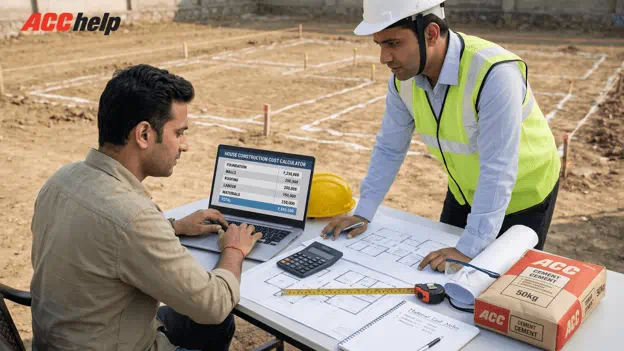
Different parts of a house have different requirements. A simple way to approach the selection is to discuss the intended use with your structural engineer or contractor before placing a large order.
- Foundation: The cement used for foundation concrete should meet the structural requirements specified for the project.
- Columns and beams: These are key structural elements, so the cement and concrete mix should follow the structural design.
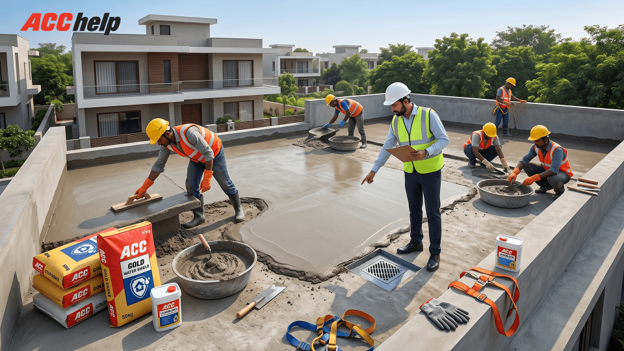
- Slabs: Cement for roof and floor slabs should be selected according to the concrete specification and exposure conditions.
- Walls: Cement used for wall-related work should suit the type of construction and mortar being prepared.
- Plastering: The cement should provide suitable workability and finish for the surface.
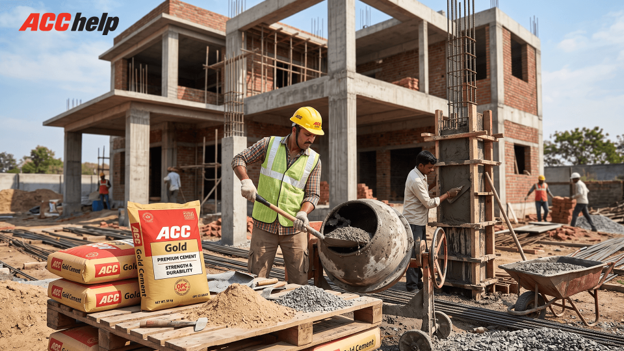
The cement used for concrete work should be selected based on the specific requirements of the project. When choosing concrete cement for foundations, columns, beams, or slabs, homeowners should consider the recommended cement type, quality, and grade. It is also important to follow the mix and construction guidance provided by the engineer or contractor.
Is ACC Gold Cement a Good Choice for House Construction?
Homeowners considering ACC Gold Cement should first identify the exact ACC product available in their market and review its stated application.
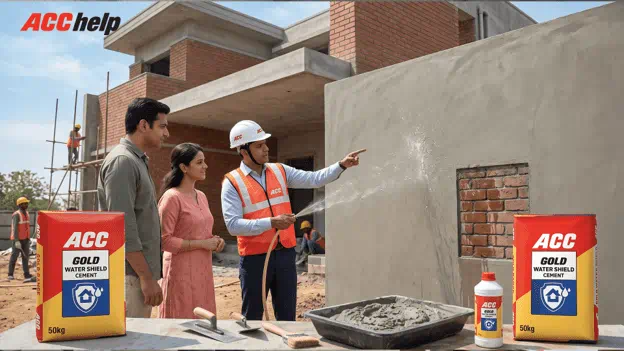
ACC’s current product portfolio includes ACC Gold Water Shield, which the company describes as a specially formulated cement designed to repel water and help protect houses from leakage and seepage. ACC lists it in its premium Gold range.
This makes water-related performance a relevant consideration for homeowners in areas where moisture and seepage are concerns. However, product suitability should still be checked against the design and requirements of the particular house. A product should not be selected simply because it is positioned as premium.
Tips for Buying Cement
A few simple checks can reduce problems later:
- Check the manufacturing date - Fresher cement is generally preferable because exposure to moisture during storage can reduce quality.
- Look for lumps - Hard lumps can indicate moisture exposure or poor storage.
- Check the bag - Avoid torn, damaged, or damp bags.
- Check the standard mark - Make sure the cement complies with the relevant BIS specification for the product.
- Buy from a trusted supplier - A reliable dealer can reduce the risk of counterfeit, damaged, or poorly stored material.
- Store it correctly - Keep cement away from moisture and off the floor. Proper storage helps protect its quality before use.
- Follow professional advice - Ask your engineer or contractor which type and grade is suitable before buying in bulk.
Build with Confidence: Choose the Right Cement
Choosing the right cement is an important step towards building a strong and durable home. Before buying, consider the cement type, quality, freshness, storage condition, and the specific requirements of your project. Always follow your engineer’s recommendations and buy from a trusted supplier. The best cement for house construction is one that matches the needs of your home and is used correctly at every stage. A careful choice today can help support the strength, durability, and long-term quality of your house.
Frequently Asked Questions
1. How do I identify the Best Cement for House Construction?
The best cement for house construction should match the requirements of your project. Check the cement type, grade, quality, manufacturing date, BIS standards, and storage condition before buying. It is also best to follow your engineer’s recommendation for different parts of the house.
2. Can the same cement be used throughout a house?
Sometimes the same product may be suitable for several applications, but this should not be assumed. Structural concrete, plastering, and other work can have different requirements, so follow the project specification.
3. How long can cement be stored?
Cement quality can be reduced when it is exposed to moisture during storage. Store bags in a dry, covered area, raised above the floor, and use older stock before newer stock.
4. What should I do if a cement bag has lumps?
Small soft lumps can sometimes form because of storage conditions, but hard lumps are a warning sign of moisture exposure. It is safer to ask the supplier or site engineer before using questionable bags.
5. Is Concrete Cement the same thing as concrete?
No. Cement is a binding material used to make concrete. Concrete also contains aggregates such as sand and stone, along with water and other materials as specified by the mix design.