
OPC vs PPC Cement: Which One Should You Use at Every Stage of Home Construction?

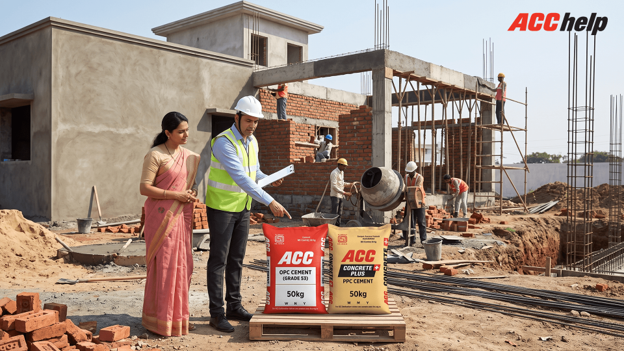
Table of Content
Choosing cement for a new home can be confusing, especially when you come across options such as Ordinary Portland Cement (OPC) and Portland Pozzolana Cement (PPC). Both are widely used in house construction, but they have different properties and may suit different types of work. Understanding these differences can help you make a better choice when selecting OPC and PPC Cement for different stages of construction.
The right cement depends on the type of work, required strength, setting time, site conditions and the advice of your engineer or contractor. There is no single cement that is automatically the best for every part of a house.
What Is OPC Cement?
OPC stands for Ordinary Portland Cement. It is a commonly used cement that develops strength relatively quickly and is suitable for many general construction activities.
OPC is covered under IS 269 and is available in different grades. It is commonly used for concrete, flooring, plastering and other general construction work.
OPC may be considered when a project requires faster early strength development. However, the exact cement grade and application should always be selected according to the structural requirement.
What Is PPC Cement?
PPC stands for Portland Pozzolana Cement. In fly ash-based PPC, fly ash is used as the pozzolanic material. PPC is covered under IS 1489 (Part 1).
PPC is commonly used for building work and can be suitable for several applications where OPC is used. It generally develops strength more gradually, so it may be preferred when very high early strength is not the main requirement.
PPC is commonly used for applications such as foundations, concrete and other general building work. The suitability of PPC depends on the requirements of the project.
OPC vs PPC Cement: What Is the Difference?
The main difference between OPC and PPC is how they are made and how they develop strength. OPC generally provides faster early strength development, while PPC contains pozzolanic material and generally develops strength more gradually.
| Feature | OPC | PPC |
|---|---|---|
| Setting time | Suitable when faster strength development is needed | Generally develops strength more gradually |
| Strength development | Faster early strength development | Gradual strength development |
| Durability | Suitable when correctly specified and used | Good durability when correctly used and cured |
| Heat generation | Generally higher | Generally lower |
| Common uses | Concrete, structural work, flooring and plastering | Concrete, foundations, general building work and plastering |
These differences do not mean that one type is always better. Both OPC and PPC Cement can be suitable for house construction when the correct grade and product are selected for the specific job.
Which Cement Is Better for Different Stages of House Construction?
The choice between OPC and PPC can vary depending on the construction stage and project requirements.
- Foundation work: PPC can be suitable for many foundation applications, while OPC may be considered when faster early strength is required. The final choice should follow the structural design.
- Columns and beams: These are important structural elements, so the cement should be selected according to the structural design, concrete requirements and required strength development.
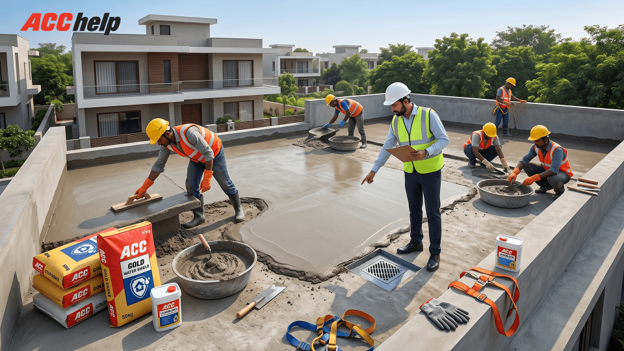
- Roof slabs: Both types can be used depending on the concrete requirements and site conditions. Proper mixing, placing and curing are important for either type.
- Brick or block work: Both OPC and PPC can be suitable for wall work. The choice may depend on the project specification and contractor's recommendation.
- Plastering: PPC can be suitable for plastering in many house construction projects because it develops strength gradually. OPC can also be used when specified for the work.
The important thing is not to choose cement only because it is labelled OPC or PPC. The construction requirement should come first.
Which Cement Is Better for Plastering?
Plastering creates the finished surface of your walls and ceilings, so the cement should support a strong and durable plaster layer. When choosing the best cement for plaster work, homeowners should consider the type of surface, weather conditions, curing practices and the recommendations of the construction professional.
PPC can be a suitable choice for plastering in many house construction projects because of its gradual strength development. OPC can also be used for plastering and may be appropriate when the project requirements call for it.
However, good plastering depends on more than the type of cement. Correct proportions, clean materials, proper application and adequate curing all play an important role in the final result.
How to Choose Between OPC and PPC Cement
Before buying cement for your home, consider these points:
- Type of work: Structural concrete and plastering may have different requirements.
- Required strength: Check the cement type and grade specified for the project.
- Setting time: Consider whether the work requires faster early strength development.
- Durability: Choose a cement suitable for the exposure and site conditions.
- Weather and site conditions: Heat, moisture and other site conditions can affect construction practices.
- Engineer or contractor's advice: Follow the project specification instead of choosing cement based only on general comparisons.
- Product quality and storage: Use properly packed, standard-compliant cement and store it in a dry place.
BIS standards for OPC and PPC include requirements related to properties such as setting time, compressive strength and soundness. Checking that the cement meets the relevant standard is therefore important.
OPC or PPC: Which One Should You Choose?
There is no universal winner between OPC and PPC. OPC may be more suitable when faster early strength is important, while PPC can be a good option when gradual strength development suits the project requirements.
For a typical home, different construction stages may require different considerations. Instead of choosing one cement for the entire project without checking, discuss the requirements with your engineer or contractor.
Understanding the differences between OPC and PPC Cement can help homeowners make a more informed choice. The best cement for plaster work may not necessarily be the same cement selected for structural concrete. The right choice should always match the work being carried out.
Choose the Right Cement for Every Stage
Choosing between OPC and PPC Cement is not about finding one cement that is always better. The right choice depends on the type of work, required strength, site conditions and your engineer or contractor's advice. For homeowners, checking the recommended cement type, using good-quality products, following proper construction practices and ensuring adequate curing can help support the strength and durability of the house.
Frequently Asked Questions
1. Is PPC good for house construction?
Yes. PPC is suitable for many house construction applications when it meets the relevant standard and is used according to the project requirements.
2. Is OPC stronger than PPC?
Not necessarily in every situation. OPC generally develops strength faster at an early stage, while PPC develops strength more gradually. The suitable choice depends on the work and required performance.
3. Which cement is suitable for plastering?
Both OPC and PPC can be used for plastering. The suitable option depends on the project requirements, site conditions and the recommendation of the engineer or contractor.
4. Can OPC and PPC be used in the same house?
Yes. Different cement types can be selected for different construction activities when they meet the required specifications. The choice should follow the construction plan.
5. What should homeowners check before buying cement?
Check that the cement meets the relevant BIS standard, is from a reliable manufacturer, is properly packed and has been stored in dry conditions. Also follow the cement type and grade recommended for the specific work.