
Cost Per Sq Ft Explained: How to Estimate Your Home Construction Budget

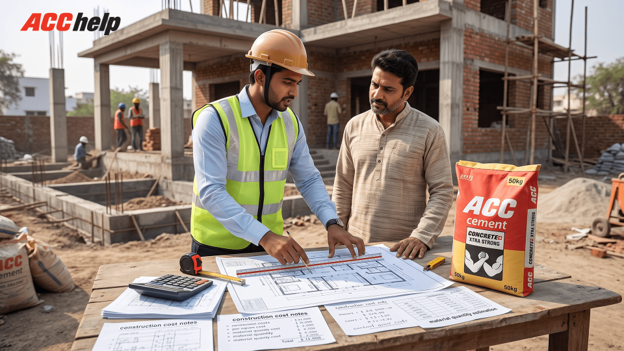
Table of Content
When planning to build a house, one of the first figures homeowners often look for is the construction cost per square foot. It gives you a simple way to connect the size of your proposed home with a rough idea of how much the construction may cost. Learning how to estimate cost of construction per Sq Ft can therefore be useful before you finalise your design, materials, or overall budget.
However, cost per square foot is only a starting point. Actual expenses can vary based on your location, house size, design, materials, labour charges, number of floors, and finishing choices.
What Does Cost Per Square Foot Mean?
Construction cost per square foot is the approximate amount spent to construct each square foot of built-up area.
The basic calculation is:
Total estimated construction cost ÷ Total built-up area = Estimated construction cost per sq. ft.
For example, suppose a house has a built-up area of 2,000 sq. ft. and the estimated construction cost is ₹40 lakh.
₹40,00,000 ÷ 2,000 sq. ft. = ₹2,000 per sq. ft.
This means the estimated construction cost works out to ₹2,000 per sq. ft. in this example. It is only an illustration of the calculation and should not be treated as a fixed market rate. Actual rates can differ significantly between cities, projects, and specifications.
How Do You Estimate Construction Cost Per Square Foot?
Homeowners can follow a simple process to get an early estimate. To Estimate Cost of Construction per Sq Ft, start with the following steps:
- Determine the built-up area of the house. Check your proposed floor plan and identify the total built-up area. If the house has multiple floors, consider the built-up area of all floors as applicable to your estimate.
- Find an approximate local construction rate. Construction rates can vary between cities and even between projects in the same location. Ask local contractors or construction professionals for an indicative rate based on your planned type and quality of construction.
- Multiply the area by the estimated rate. For example, multiplying 2,000 sq. ft. by an assumed rate of ₹2,000 per sq. ft. gives an initial estimate of ₹40 lakh.
- Add costs that may not be included. Check whether the quoted rate covers electrical work, plumbing, flooring, doors, windows, painting, and other finishing work.
- Keep money aside for unexpected expenses. Changes in design, material prices, site conditions, or additional work can increase the final cost.
What Factors Affect Construction Cost Per Sq. Ft.?
The cost per square foot is not the same for every house. Several factors can influence it:
- Location: Labour rates, transportation expenses, material availability, and local market conditions differ across areas.
- Size of the house: A larger home may have different cost patterns depending on its layout and specifications.
- Number of floors: Multi-storey construction may require additional structural and construction work.
- House design: Complex layouts, unusual shapes, large openings, or detailed architectural features can increase costs.
- Cement and other building materials: The quality and type of materials selected can affect the overall budget.
- Labour charges: Local labour availability and rates can have a direct impact on construction expenses.
- Flooring and finishing: Premium tiles, flooring, paint, and decorative finishes can raise the cost.
- Doors and windows: Material, size, design, and hardware choices can change the estimate.
- Electrical and plumbing work: The number of fittings, bathrooms, electrical points, and other requirements can affect costs.
- Quality of fittings and finishes: Standard and premium specifications can produce very different budgets.
This is why two houses with the same built-up area can still have very different total construction costs.
Does a Larger House Always Cost More Per Sq. Ft.?
Not necessarily. A larger house will generally require more total construction work, but its cost per square foot does not automatically increase at the same rate.
For example, a simple layout with fewer bathrooms and standard finishes may have a different cost per square foot from a similarly sized house with multiple bathrooms, larger windows, detailed design features, and premium finishes.
The number of rooms, layout efficiency, design complexity, and finishing choices all influence the final calculation. Therefore, homeowners should consider both the total area and the specifications of the house rather than relying on size alone.
What Is Included in Construction Cost Per Sq. Ft.?
There is no single definition of what a quoted rate must include. Different contractors and estimates may cover different items.
A construction rate may include structural work, walls, roof work, flooring, electrical work, plumbing, doors and windows, painting, and basic finishing. However, other estimates may leave out expenses such as land cost, architect fees, government approvals, interiors, furniture, landscaping, or external development.
Before using any rate for your budget, ask exactly what is included. This makes the estimate more useful and reduces the risk of comparing two rates that cover completely different scopes of work.
How Can a Construction Budget Calculator Help?
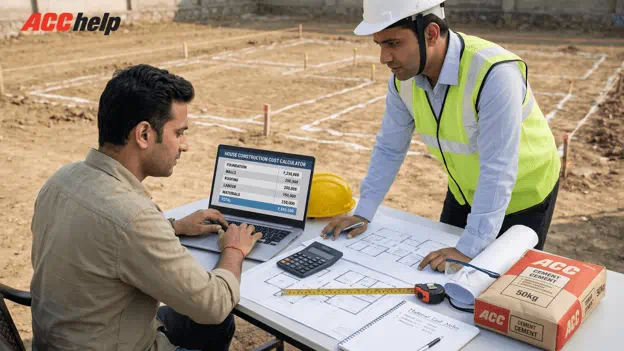
A construction budget calculator can make early planning easier by using details such as house size and an estimated construction rate to provide an indicative budget.
It can help homeowners understand how changes in area or assumed construction rates may affect the overall estimate. A construction budget calculator can therefore be useful for initial discussions with contractors and professionals.
However, a calculator should not be treated as a final quotation. It cannot fully account for every site condition, design decision, material choice, or project-specific expense.
How to Create a More Accurate Construction Budget
Once you have an initial figure, you can make your budget more realistic by:
- Starting with the correct built-up area: Use the latest floor plan instead of an approximate area.
- Using local construction rates: Rates from another city may not reflect your local labour and material costs.
- Deciding your finishing level: Identify whether you want basic, standard, or higher-end finishes.
- Including important work: Account for electrical, plumbing, flooring, doors, windows, painting, and other required work.
- Accounting for labour costs: Confirm whether labour is included in the rate or needs to be calculated separately.
- Keeping a contingency amount: Set aside a separate amount for unexpected expenses.
- Reviewing changes: Recalculate the estimate whenever the design, area, or material specifications change.
- Getting professional input: Discuss the estimate with a qualified engineer or experienced contractor before construction begins.
These steps can help you estimate cost of construction per Sq Ft more realistically and turn a basic calculation into a more useful planning figure. Choosing good-quality cement and other construction materials should also be part of this discussion, since material quality can influence both the initial budget and the long-term performance of the house. ACC can be considered when selecting cement based on the specific requirements of your construction project.
Cost Per Sq. Ft. vs Total Construction Cost
| Term | Meaning | Why It Matters |
|---|---|---|
| Cost per sq. ft. | Approximate construction cost for each square foot | Helps compare and estimate |
| Total construction cost | Overall estimated cost of the project | Helps plan the complete budget |
The two figures work together. Cost per square foot provides a quick way to understand the relationship between area and construction expenses, while total construction cost gives you a broader view of the money required for the project.
Why You Should Not Rely Only on Cost Per Sq. Ft.
Cost per square foot is helpful when you are still in the planning stage, but it cannot capture every detail of a house. Site conditions, design changes, material prices, labour rates, and finishing choices can all affect the final amount.
For this reason, homeowners should use the figure as an early budgeting tool rather than a guaranteed project price. Once the design and specifications are clearer, a detailed estimate should be prepared before construction begins.
A Practical Starting Point for Your Construction Budget
Knowing how to estimate cost of construction per Sq Ft can give homeowners a practical starting point for planning a house construction budget. It helps connect the size of the home with an initial cost estimate and makes it easier to understand how design and material choices may affect spending. However, a complete budget should also consider project-specific costs, labour, finishing, and other expenses that may not be included in a basic per-square-foot rate. A detailed estimate based on the actual house design is the best way to move from an early calculation to a more realistic construction budget.
Frequently Asked Questions
1. How do I estimate construction cost per square foot?
Multiply the built-up area by an appropriate local construction rate to get an initial estimate. To estimate cost of construction per Sq Ft, make sure you understand what the selected rate includes before using it.
2. What factors affect construction cost per sq. ft.?
Location, house size, number of floors, design complexity, materials, labour, flooring, electrical and plumbing work, doors, windows, and finishing choices can all affect the cost.
3. Is cost per square foot the same in every city?
No. Construction rates can vary between cities and locations because of differences in labour charges, material availability, transportation, site conditions, and local market conditions.
4. How can I create an accurate construction budget?
Start with the correct built-up area, use local rates, define your desired finishing level, include major construction work, account for labour, keep a contingency amount, and review the estimate whenever the design or specifications change.
5. Can a Construction Budget Calculator give the final project cost?
No. It can provide a useful early estimate, but the final cost depends on the actual design, site conditions, materials, labour, finishes, and other project-specific expenses.